Las Vegas
A theatrical city built on a desert floor: worth it for the shows, the food and the fact that some of America's best landscapes are a short drive away.
March–May and September–October are the two windows that work best for Las Vegas: hot temperatures without the peak humidity; prime hiking and outdoor season with the trails and passes open. The months in between are skipped; they're the peak-season extremes for Las Vegas.
The Strip, decoded
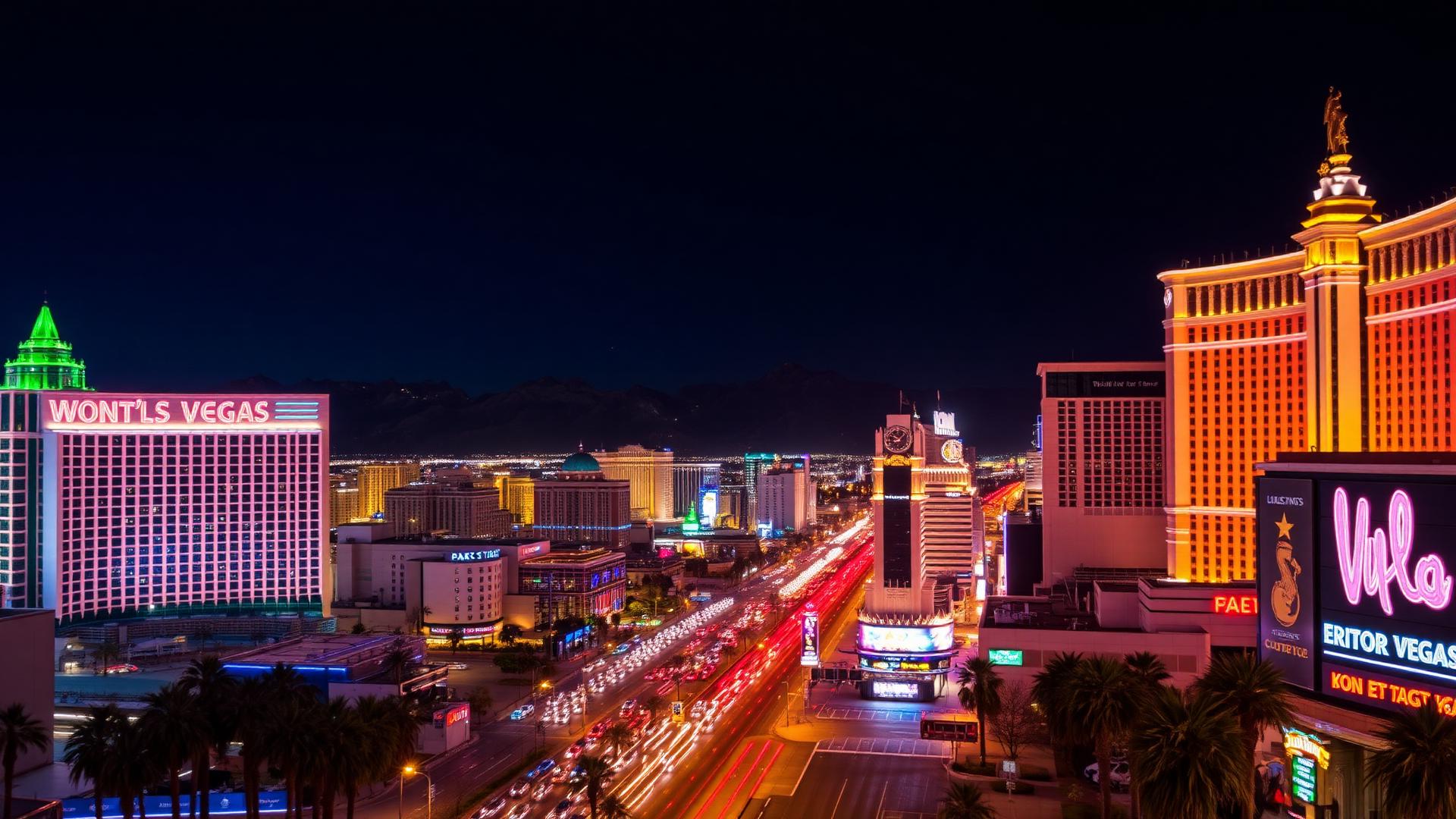
The Strip is four miles long and looks walkable on a map; it isn't in August. Group your days by section. South Strip (Mandalay Bay, Luxor, MGM) is spread out and quieter; Center Strip (Bellagio, Caesars, Cosmopolitan, Aria) is where you want to be for walking convenience; North Strip (Wynn, Encore, Resorts World, the Sphere nearby) is the newest money.
Budget realistically: the room rate is the small part. Resort fees ($40-60 a night), parking fees and drink prices add up fast. Weekday stays cost a fraction of Friday–Saturday, and a conference in town can triple rates overnight: check the calendar before booking.
Downtown / Fremont Street is the older, cheaper, weirder Vegas: low-limit tables, a neon canopy, the Neon Museum's sign graveyard and far better bars in the Arts District.
Shows and spectacle
Cirque du Soleil runs several resident productions - O at Bellagio (water) and Mystère are the classics, Beatles LOVE-style music shows come and go. The Sphere is the current must-see: a 16K wraparound screen where the venue is the attraction.
Residencies rotate constantly; check who's playing before you fix dates. For free spectacle: the Bellagio fountains every 15-30 minutes, the Bellagio conservatory, and the view from the High Roller or the Strat.
Eating and drinking
Vegas is now a genuine food city because every famous chef has an outpost here. The value trick is lunch: the same kitchens at half the dinner price. Book anything notable two to four weeks ahead for weekends.
Beyond the Strip, Chinatown on Spring Mountain Road is where locals eat. Sichuan, Korean barbecue, ramen, Thai, at a third of resort prices and a $15 rideshare away. Buffets still exist but are no longer the bargain; treat them as one experience, not a strategy.
Gambling, if you play: know the house edge, set a loss limit before you sit down, and use the free player's card, since it's the only reliable discount mechanism in the building.
Getting out into the desert
The best day of most Vegas trips happens outside it. Red Rock Canyon is 30 minutes away, a 13-mile scenic loop with sandstone escarpments and short hikes; timed entry is required in the busy months. Valley of Fire State Park (an hour) has the best red rock and petroglyphs in the state.
Further: Zion (2.5 hours), Death Valley (2 hours), the Grand Canyon South Rim (4.5 hours) and Bryce (4 hours). Rent a car for these; tour buses run but eat the day. Full itineraries are in the Southwest USA guide.
Hoover Dam and Lake Mead are 45 minutes out and make a decent half-day if you don't want a big drive.
Practicalities
March–May and September–November are the good months: warm days, cool evenings, hiking still possible. June–August regularly exceeds 40°C, which rules out daytime desert walking and makes the Strip a series of dashes between air-conditioned buildings. Winter is mild by day and genuinely cold at night.
Harry Reid airport is 10 minutes from the Strip. The Monorail covers part of the east side only; rideshares and walking cover the rest. Casino floors are indoor-smoking, and most resorts are cashless-friendly but tipping is expected everywhere.
Three nights is plenty for the city; five if you're adding a national park loop.
Want to find more places like Las Vegas?
Answer a few questions and get matched to 170+ destinations worldwide.
Find my matches