Jamaica
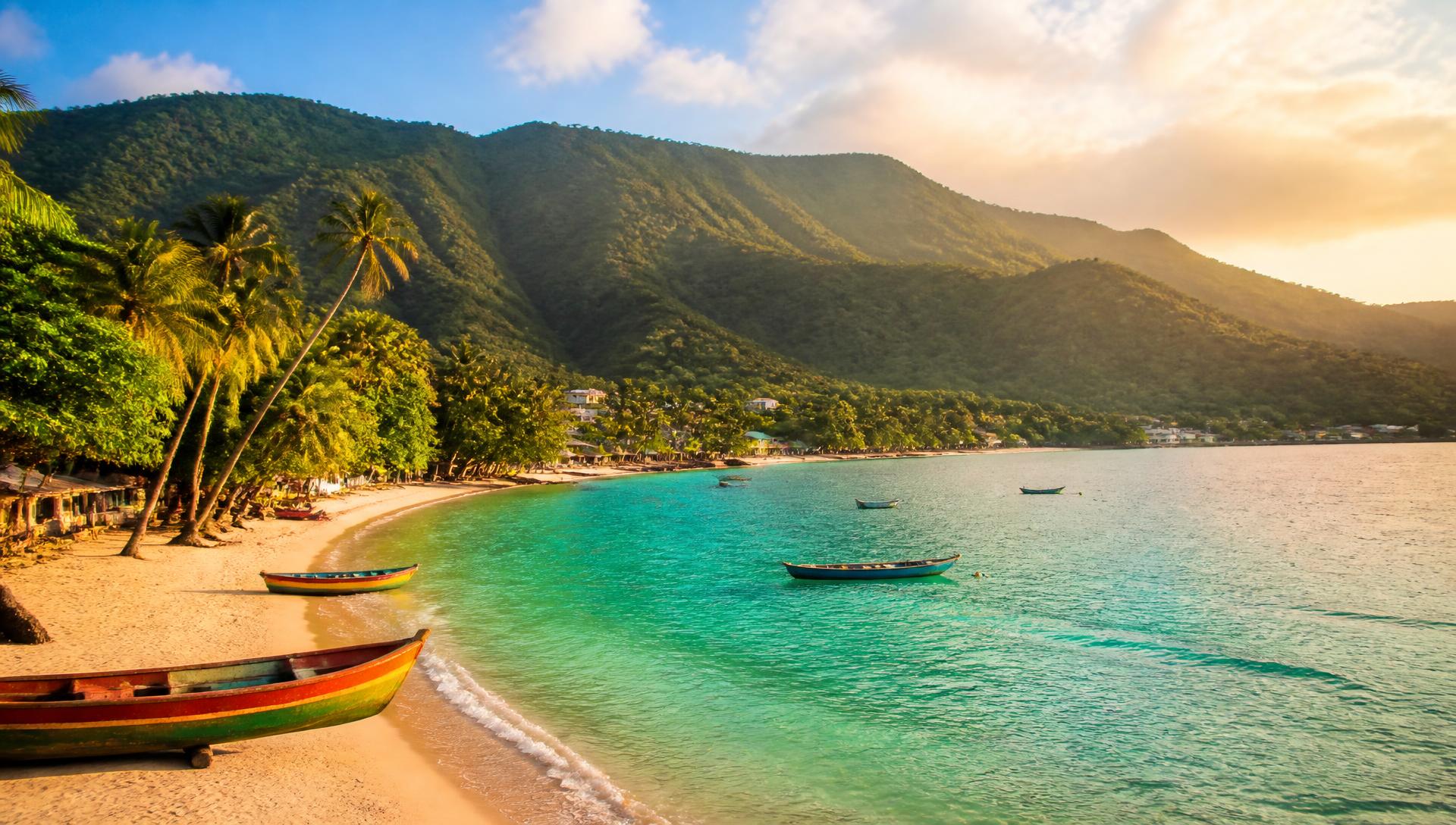
Jamaica is far more than an all-inclusive strip. The island has a proper interior: 2,000-metre mountains, river gorges, waterfalls, and a culture that exports itself worldwide. Pick two bases and you get both sides.
December–June lands in winter for Jamaica: warm, sunny weather ideal for the coast; prime hiking and outdoor season with the trails and passes open; calm seas and swimmable water.
Choosing a base
Negril on the west end has the famous seven-mile beach, the cliff-jumping sunset bars at West End, and the softest introduction to the island. Montego Bay is the busiest airport and the most resort-heavy: fine as an arrival night, less interesting as a whole trip.
Treasure Beach on the arid south coast is the antidote: fishing villages, guesthouses instead of resorts, black-sand-and-gold coves, and the boat trip up the Black River to the Pelican Bar, a shack on a sandbar in the middle of the sea.
Port Antonio in the northeast is the green, rainy, most beautiful corner. Frenchman's Cove, the Blue Lagoon, bamboo rafting on the Rio Grande and almost no crowds. Ocho Rios sits in between, with Dunn's River Falls and the cruise-ship day-trip machine.
The Blue Mountains
An hour's steep drive from Kingston puts you in coffee country: cool nights, mist, and small farms selling the beans that command the world's highest prices. Stay a night at a mountain lodge, tour a coffee estate, and do the pre-dawn walk to Blue Mountain Peak (2,256 m) for sunrise over the island, a 7-8 hour round trip that starts around 2am from Penlyne Castle.
For a gentler version, the Holywell park trails, Cane River Falls and the Irish Town viewpoints work as a day trip from Kingston.
Kingston, music and history
Kingston is the reason reggae exists. The Bob Marley Museum at 56 Hope Road is the obvious pilgrimage; Trench Town Culture Yard and the Tuff Gong studio tour go deeper. Sound-system street parties (Kingston Dub Club on Sundays, Uptown Mondays) are where the music is actually alive rather than curated.
Add the Devon House mansion (and its ice cream), the National Gallery, and a day trip to Port Royal, the earthquake-sunk pirate capital across the harbour.
Eating and drinking
Jerk is a cooking method, not a sauce: pimento wood, scotch bonnet, allspice, hours of smoke. Eat it at a roadside drum pan. Boston Bay near Port Antonio is the spiritual home. Beyond that: ackee and saltfish for breakfast, escovitch fish, curry goat, oxtail, patties from a bakery, festival dumplings, and roast breadfruit.
Drink Red Stripe, sorrel at Christmas, fresh jelly coconut anywhere, and rum. Appleton in the south does estate tours, and overproof white rum is stronger than it looks.
Practicalities
December–April is the dry, reliable window and the peak season. May–June and November are quieter with short showers. Hurricane risk peaks August–October, when many small places close.
Getting around: route taxis are cheap and local, private transfers are easy to arrange through your accommodation, and driving is on the left on roads with unlit potholes and confident overtaking, which is doable but not a relaxing first driving country. Kingston to Ocho Rios is fast on the toll highway; the north-to-south coast crossing is not.
Expect to be offered ganja constantly and to be quoted tourist prices; a friendly, firm decline is normal and fine. Stick to well-known areas after dark, especially in Kingston and Montego Bay, and use accommodation-arranged drivers at night.
For a very different Caribbean flavour with more colonial-era cities, see the Cuba guide; for Mayan ruins plus reef, the Yucatán guide.
Want to find more places like Jamaica?
Answer a few questions and get matched to 170+ destinations worldwide.
Find my matches