New Zealand (South Island)
The South Island squeezes glaciers, fjords, rainforest, braided rivers and empty gold-rush valleys into a landmass smaller than Britain. It is a driving destination first, and the distances are shorter than the drive times suggest.
December–February lands in the southern summer for New Zealand (South Island): warm, sunny weather ideal for the coast; prime hiking and outdoor season with the trails and passes open; calm seas and swimmable water.
The classic loop
Most trips run Christchurch to Queenstown or the reverse, in a loop of ten days to three weeks. A dependable version: Christchurch, over Arthur's Pass to the West Coast, down past the Franz Josef and Fox glaciers, through the Haast Pass to Wanaka and Queenstown, out to Fiordland for Milford Sound, then back north via Central Otago and Lake Tekapo.
Roads are two-lane, scenic and slow, with plenty of one-lane bridges. Reckon on 60-70 km/h averages and never plan more than four hours of driving in a day, because you will stop constantly.
A campervan is the classic choice, with freedom camping only allowed at designated self-contained sites. A car plus motels or holiday parks costs about the same and is warmer in shoulder season.
Fiordland and the walks
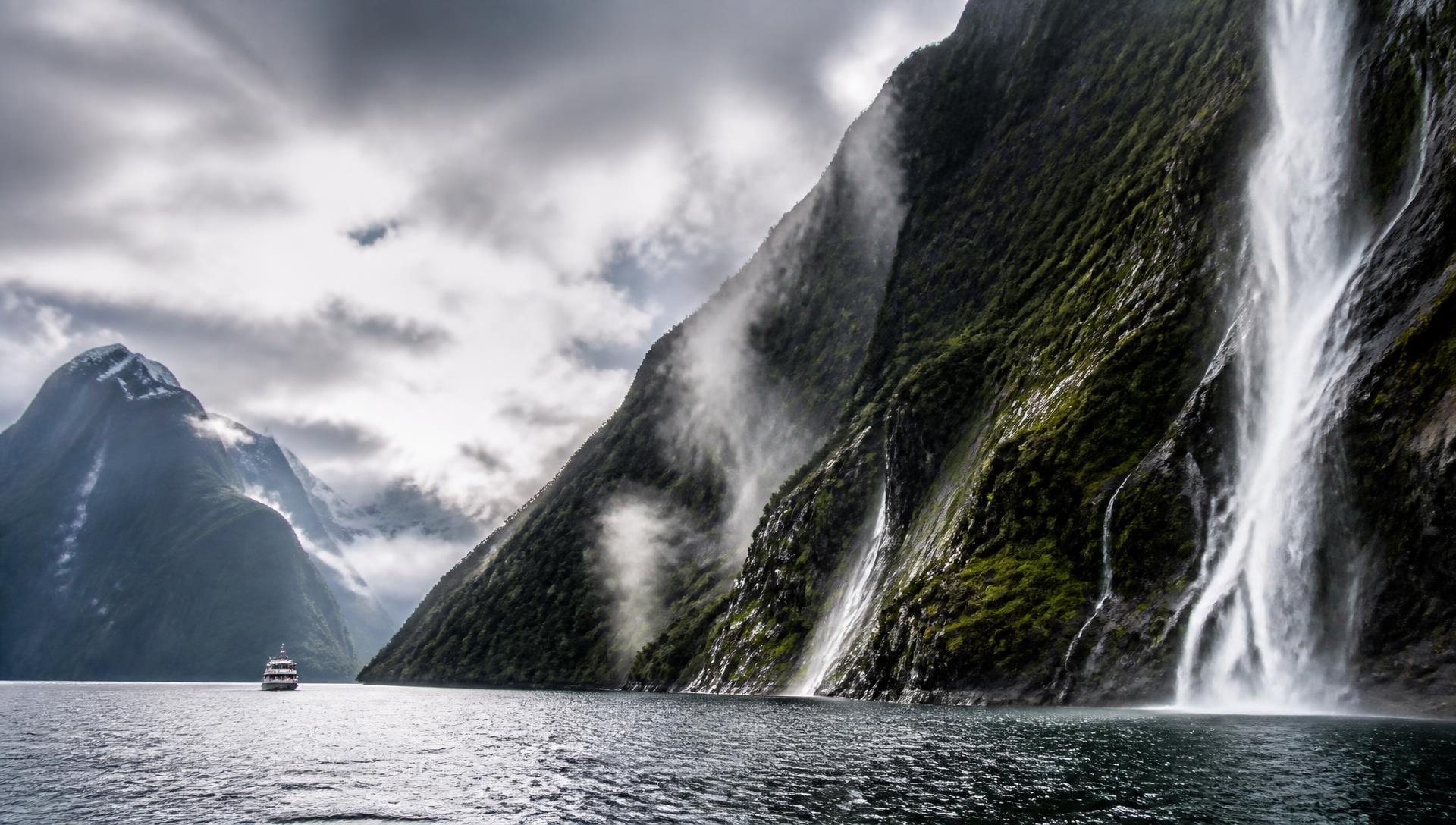
Milford Sound is the headline: sheer 1,200-metre walls, waterfalls that blow upward in the wind, and seals and dolphins in the fjord. Take a morning or late cruise to avoid the bus wave, and go even if it rains, because the waterfalls are at their best then. Doubtful Sound is longer to reach, quieter and, for many, better.
Three of New Zealand's Great Walks are here: the Milford Track (four days, the most famous, bookings open months ahead and sell out in minutes), the Routeburn (three days, alpine and easier to secure) and the Kepler. If the huts are gone, the day sections still deliver, and the Hooker Valley and Roys Peak walks are world-class half-days.
Aoraki / Mount Cook deserves two nights: glacier lakes, the country's highest peak and a dark-sky reserve for the Milky Way and, with luck, the aurora australis.
Adventure and slower pleasures
Queenstown invented commercial bungy jumping and still does everything: jet boats through the Shotover canyons, skydiving over the Remarkables, canyoning, paragliding and, in winter, four ski fields within an hour. Wanaka is the calmer neighbour with the same mountains.
The quiet counterweights: kayaking in Abel Tasman, whale watching at Kaikoura, penguins and albatross on the Otago Peninsula, cycling the Otago Central Rail Trail, and the pinot noir and stargazing of Central Otago and Tekapo.
Practicalities
Fly into Christchurch (CHC) or Queenstown (ZQN); most travellers connect through Auckland. Many nationalities need an NZeTA visa waiver plus a visitor levy, both arranged online before departure. Biosecurity is strict, so declare all food and clean any hiking boots.
The seasons are flipped. December to February is summer, warm and busy, with accommodation booked months ahead. March and April are the sweet spot: autumn colour, fewer people, cheaper beds. June to September is ski season around Queenstown and Wanaka, with some alpine passes affected by snow.
It is not a cheap country: about NZ$300-450 a day for two with a car, motels and eating out. Sandflies on the West Coast and in Fiordland are relentless, so pack repellent. Weather changes fast in the mountains; check the forecast and leave your plans on an intentions form for longer walks.
Want to find more places like New Zealand (South Island)?
Answer a few questions and get matched to 170+ destinations worldwide.
Find my matches