Socotra
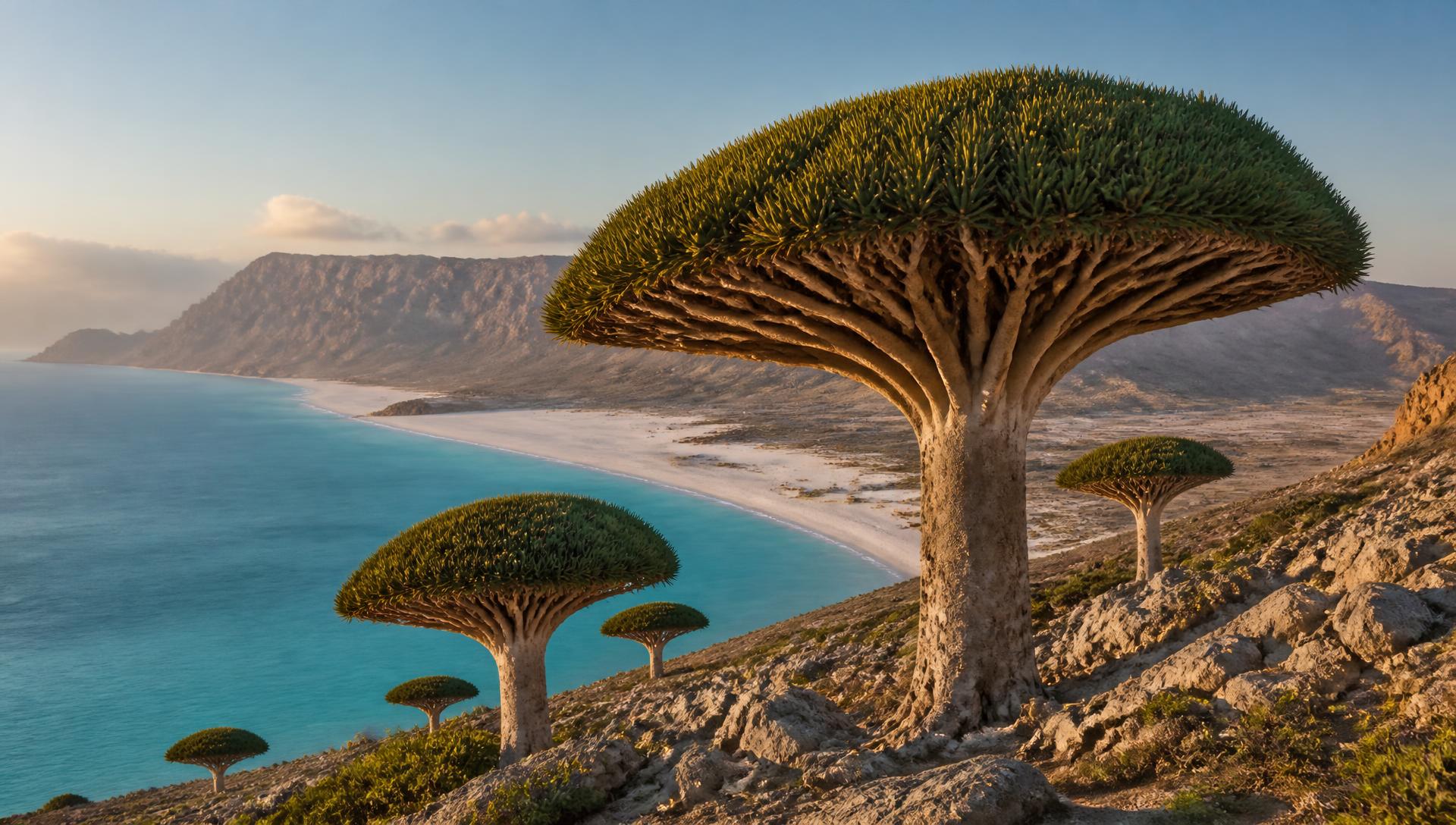
Socotra is one of the most isolated places on Earth, a Yemeni island in the Indian Ocean where a third of the plant life exists nowhere else. It looks like another planet: dragon's blood trees shaped like umbrellas, deserts of crystal, and beaches with no footprints but yours.
September–May lands in winter for Socotra: warm, sunny weather ideal for the coast; prime hiking and outdoor season with the trails and passes open; calm seas and swimmable water.
A landscape like nowhere else
The island's signature is the dragon's blood tree (Dracaena cinnabari), an umbrella-shaped relic that bleeds red resin. The best stands are on the Diksam Plateau, reached by 4WD across a landscape that shifts from limestone karst to surreal desert.
Elsewhere: the Hoq Cave with its ancient stalactites and inscriptions, the Detwah Lagoon (a protected marine lagoon and the island's most photogenic beach), and the Arher dunes - mountains of white sand stacked against the cliffs.
Why it's so empty
Socotra sees fewer than a few thousand visitors a year. The mainland Yemen conflict, a near-total absence of tourist infrastructure, and the need for permits keep numbers vanishingly low. This is off-the-beaten-path in its truest sense: you may not see another traveller for days.
There is no resort, no hotel chain and minimal Wi-Fi. Visitors camp or stay with local families. The experience is raw and unforgettable, but it demands flexibility and a tolerance for discomfort.
Getting there (and the permits)
Access is the single biggest hurdle. There are periodic flights from Cairo and Abu Dhabi to Socotra (SCT), operated by a handful of carriers: schedules change with the political winds, so check current routes before committing.
Almost all visitors go with a registered local operator who arranges the entry permit, transport, a 4WD with driver and camping gear. Independent travel is logistically near-impossible. Budget $1,500-3,000 per person for a one-week trip, all-in.
When to go & safety
The ideal window is September to May, when the monsoon winds drop and the island is accessible. The summer monsoon (June-August) brings punishing winds that make travel miserable.
Safety: the island itself has been largely untouched by Yemen's mainland conflict, but most governments advise against travel to the country as a whole. Check your foreign office's guidance, use a reputable operator, and accept that you travel here at your own risk. For the truly intrepid, it's among the most rewarding journeys on Earth.
Want to find more places like Socotra?
Answer a few questions and get matched to 170+ destinations worldwide.
Find my matches