Abu Dhabi
Abu Dhabi is the quieter, wealthier and more deliberate half of the UAE: one of the world's great mosques, a museum district built from scratch, and, an hour inland, the empty dunes of the Rub' al Khali that the whole country grew out of.
March–April and November are the two windows that work best for Abu Dhabi: warm, sunny weather ideal for the coast; prime hiking and outdoor season with the trails and passes open; calm seas and swimmable water. The months in between are skipped; they're the peak-season extremes for Abu Dhabi.
Sheikh Zayed Grand Mosque
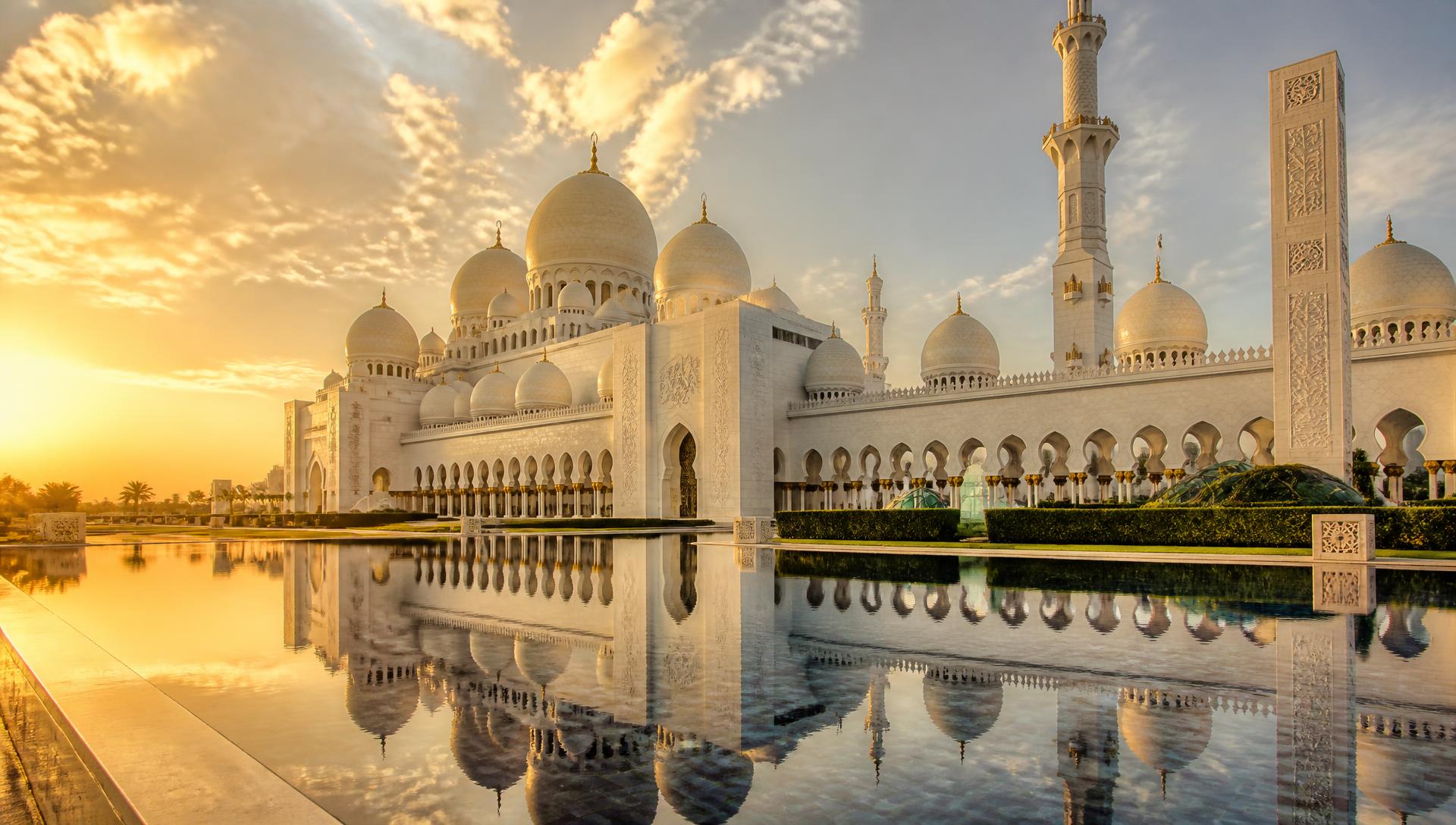
This is the reason most people come, and it deserves the top of the list. Eighty-two domes, a courtyard of floral marble inlay, the world's largest hand-knotted carpet and chandeliers of Swarovski crystal: all finished in 2007 and open to non-Muslims outside prayer times.
Go for the last hour of daylight and stay past sunset: the marble turns gold, then the lighting system shifts through cool blues tied to the lunar cycle. Entry is free but a timed ticket must be booked online, and the walk in from the visitor centre is long. Dress code is enforced: ankle-length loose clothing, covered shoulders, and a headscarf for women (bring your own; abayas are no longer loaned).
For the classic reflection shot of the mosque, cross the pedestrian bridge to Wahat Al Karama, the landscaped memorial park on the far side of the causeway. The long reflecting pool mirrors the domes and minarets, especially after dark, and it's quieter than the mosque forecourt. Go there first for the layout, then head inside.
Saadiyat: the museum district
Louvre Abu Dhabi is worth a half-day on its own. Jean Nouvel's perforated dome creates a 'rain of light' over a village of white galleries at the water's edge, and the collection is arranged chronologically across civilisations rather than by nation. Go late afternoon and end on the outdoor terraces.
The district around it keeps growing: the Zayed National Museum tells the story of the founding president and the pre-oil Gulf, teamLab Phenomena is a large-scale immersive art space, and the Guggenheim Abu Dhabi is still under construction. Manarat Al Saadiyat hosts changing exhibitions and is free.
Saadiyat is also the best beach island: soft white sand, hawksbill turtles nesting in summer, and hotel day passes if you don't stay there.
Yas Island, the Corniche and the old city
Yas Island is the entertainment cluster. Ferrari World (home of the world's fastest rollercoaster), Warner Bros. World, Yas Waterworld, SeaWorld Abu Dhabi and the Yas Marina F1 circuit, which hosts the season-closing Abu Dhabi Grand Prix each December. Book far ahead for that week; prices double.
On the mainland, the Corniche is an 8 km waterfront promenade with a Blue Flag beach and a cycle path, the standard early-evening walk. Qasr Al Watan, the working presidential palace, opens part of its halls and library to visitors and is more impressive than it sounds. Qasr Al Hosn, the coral-and-sea-stone fort from the 1760s, is the city's oldest building and its origin story.
For contrast, Al Mina fish and fruit markets and the Heritage Village across the breakwater show the fishing-and-pearling town that existed within living memory.
The Liwa desert and the Empty Quarter
Two and a half hours south-west, the Liwa Oasis sits on the northern rim of the Rub' al Khali - the Empty Quarter, the largest continuous sand desert on earth. This is a completely different experience from a Dubai desert dinner: 300 m dunes, almost no other visitors, and silence.
Moreeb Dune ('Mountain of Terror') is one of the world's steepest driveable dunes and hosts a hill-climb festival in winter. Qasr Al Sarab, half-buried in the sand nearby, is the place to splurge for a night; there are also public campsites if you have a 4×4 and experience. Never drive off-road here in a 2WD, and never alone.
Closer to the city, Al Wathba has a salt-flat 'fossil dune' park and a wetland reserve with thousands of flamingos between November and March.
Al Ain and the mountains
Al Ain, 90 minutes inland on the Omani border, is the emirate's green heart and a UNESCO site. The Al Ain Oasis has 147,000 date palms watered by a 3,000-year-old falaj channel system you can walk through in shade, and the Al Jahili Fort and Qasr Al Muwaiji cover the region's history.
Behind town, Jebel Hafeet rises to 1,240 m up one of the best mountain roads in the Gulf: 11 km of switchbacks to a summit terrace that's often 8 °C cooler than the coast. At the base, Green Mubazzarah has hot springs and picnic lawns. Al Ain works as a long day trip or a one-night stop en route to Oman, whose Musandam exclave, Muscat and Wahiba Sands pair naturally with the UAE into a wider Arabian trip.
Eating: Emirati food and everything else
Abu Dhabi is the best place in the UAE to eat actual Emirati food. Look for machboos (spiced rice with lamb or fish), harees (slow-cooked wheat and meat), thareed (broth-soaked flatbread), grilled hammour, camel-milk ice cream and luqaimat - sweet dumplings in date syrup, at places like Al Mrzab or Mezlai.
Beyond that, the everyday food is South Indian, Pakistani, Lebanese and Iranian, eaten cheaply in Al Zahiyah and Tourist Club. The high end lives in the hotels: the Emirates Palace for afternoon tea (and the gold-flecked cappuccino, if you must), and a growing fine-dining scene on Saadiyat.
Practicalities and pairing with Dubai
Fly into Abu Dhabi (AUH), or into Dubai and drive the 90 minutes down the E11: many trips combine both, with two or three nights each. Buses run between the cities hourly and cheaply; a rental car is what you want for Liwa or Al Ain.
For a longer trip, Abu Dhabi is also a natural launch point into Oman: the Hajar mountains, Musandam's fjords and Muscat are an easy drive or short flight, and the two countries share border crossings and climate, so November to March suits both. Etiquette matches the rest of the UAE: alcohol in licensed hotels and bars only, modest dress in mosques and malls, no public drunkenness. Abu Dhabi is marginally more conservative and considerably calmer than Dubai. Ramadan brings daylight fasting in public and late, generous iftars.
When to go
November to March is the season: 22–28 °C, cool evenings, flamingos at Al Wathba, comfortable desert nights and the Grand Prix in December. March and November are the sweet spot for combining sightseeing with beach time.
June to September is 42 °C+ with high humidity: outdoor sightseeing, the mosque walk included, becomes genuinely difficult, though hotel rates are at their lowest and the indoor attractions on Yas stay busy.
Want to find more places like Abu Dhabi?
Answer a few questions and get matched to 170+ destinations worldwide.
Find my matches