Oman
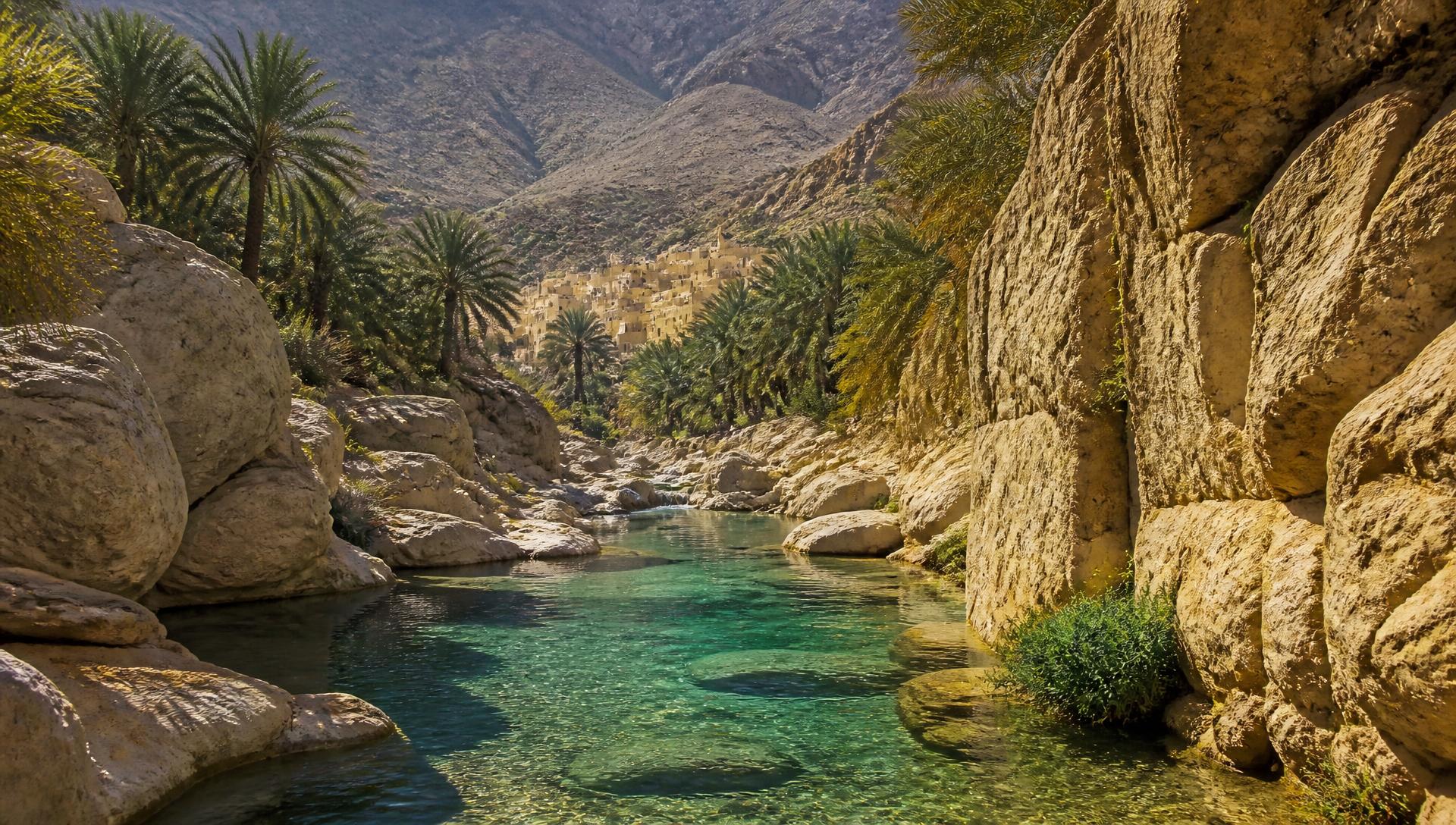
Oman is Arabia without the skyline: mud-brick forts, canyons with cold green swimming pools, orange dunes and a coastline where turtles still nest. It is also one of the easiest and safest self-drive countries in the region.
October–April lands in winter for Oman: warm, sunny weather ideal for the coast; prime hiking and outdoor season with the trails and passes open; calm seas and swimmable water.
Muscat and the north
Muscat is low-rise by decree: white buildings, no towers, mountains coming straight down to the sea. Spend a day on the Sultan Qaboos Grand Mosque (open to non-Muslims in the morning; modest dress and headscarf required), the Royal Opera House, and the lanes and silver stalls of Mutrah Souq along the corniche.
North of the capital, Nizwa is the old interior capital with a great Friday livestock market and a round fort you can climb. Nearby Bahla and Jabreen add more forts, and Misfat al Abriyeen is a terraced mountain village of stone houses and falaj irrigation channels you can walk through.
Wadis and mountains
The wadis are the reason to come. Wadi Shab requires a short boat crossing and a 45-minute walk before a series of turquoise pools and a swim into a hidden waterfall cave. Wadi Bani Khalid is the easy-access option with big pools, and Wadi Tiwi and Wadi Damm are quieter.
Above them, Jebel Shams is the 'Grand Canyon of Arabia', the Balcony Walk (W6) traces a ledge above a 1,000 m drop to an abandoned village, and it is genuinely one of the world's great half-day hikes. Jebel Akhdar is cooler and terraced with pomegranates and, in April, Damask roses.
A 4×4 is required for Jebel Shams and Jebel Akhdar (checkpoints enforce it) and for most off-road wadi access. A 2WD is fine for the coastal highway and Muscat.
Desert and coast
The Wahiba Sands (Sharqiya Sands) are classic dune country: stay overnight at a desert camp for the sunset, the silence and the stars. Camps arrange the drive in; deflating tyres and dune driving without experience is a good way to get stuck.
On the coast, Ras al Jinz is a protected green-turtle nesting beach where guided night and pre-dawn tours run year-round (peak nesting June-September). Sur has a dhow-building yard, and the fjord-like Musandam peninsula in the far north offers dhow cruises among dolphins.
In the far south, Salalah is a different country entirely: during the khareef monsoon from late June to early September the hills turn green and misty while the rest of the Gulf bakes.
Practicalities & etiquette
Fly into Muscat (MCT). Most nationalities get a visa online or on arrival. Roads are excellent, signposted in English, and fuel is cheap: self-driving is the standard way to travel and wild camping is legal and common in the wadis and on the beaches.
Oman is conservative but relaxed with visitors. Cover shoulders and knees away from hotel pools; swimwear at public wadis means shorts and a t-shirt over it for women. Alcohol is served in hotels only. Friday morning is the quiet time.
When to go & what it costs
October to April is the season: daytime highs in the 25-32°C range and cool desert nights. May to September is brutally hot in the north (45°C+), which is exactly when Salalah's khareef makes the south the place to be.
Costs sit mid-range: reckon $120-200 per day for two with a 4×4, fuel, mid-range hotels or camping, and eating in local restaurants. Desert camps and Jebel Akhdar resorts push it higher.
Want to find more places like Oman?
Answer a few questions and get matched to 170+ destinations worldwide.
Find my matches