California
California packs an implausible amount into one state: the most famous coastal drive in the world, granite valleys and giant sequoias, deserts below sea level, and two very different cities at either end of it.
March–May and September–October are the two windows that work best for California: warm, sunny weather ideal for the coast; prime hiking and outdoor season with the trails and passes open; calm seas and swimmable water. The months in between are skipped; they're the peak-season extremes for California.
The classic route
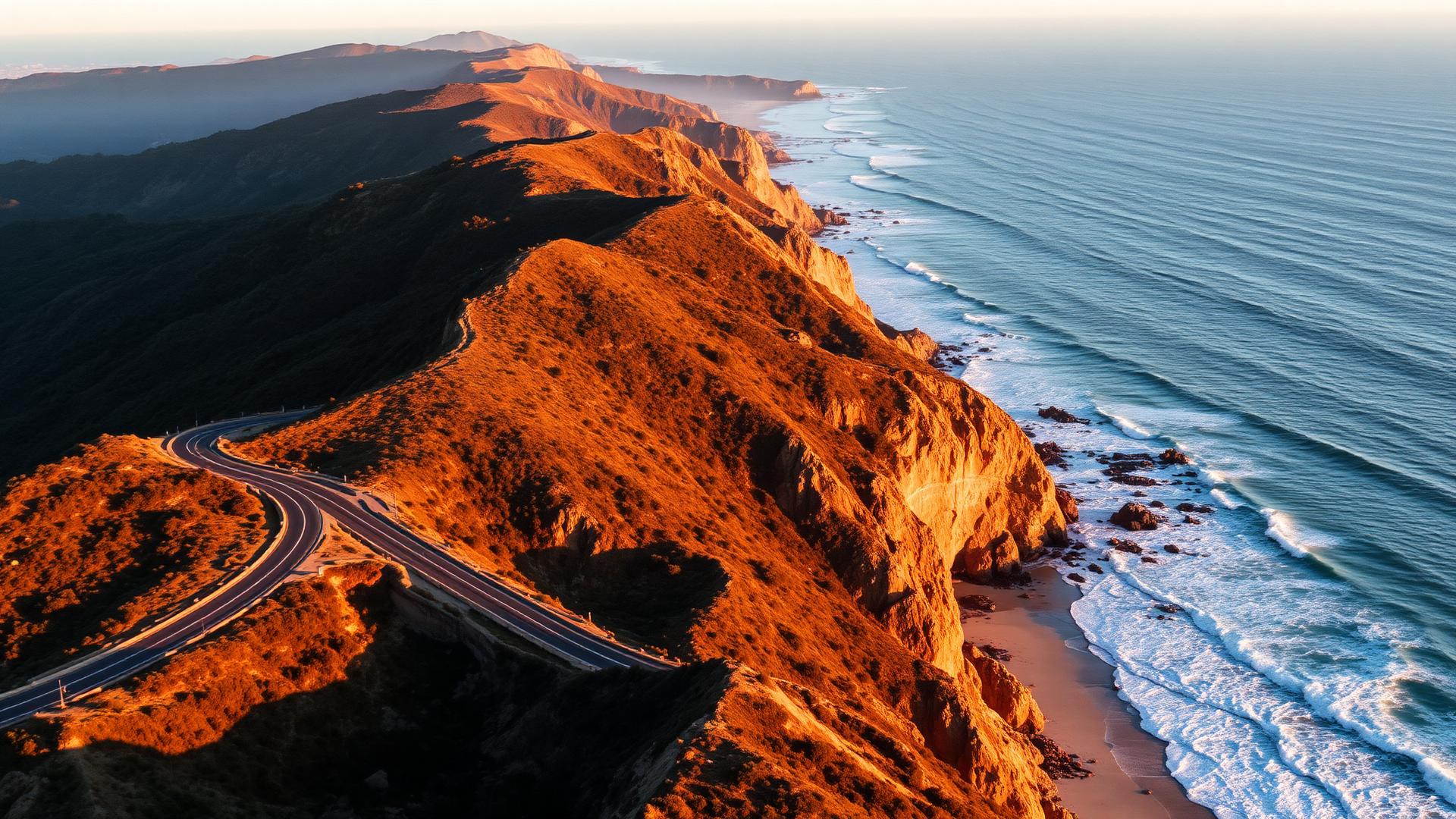
The standard loop runs San Francisco → Highway One → Big Sur → San Luis Obispo → Santa Barbara → Los Angeles, ideally driven north to south so you're on the ocean side of the road. That's about 800 km and needs a minimum of five days to be enjoyable.
Important: Big Sur and Highway One are prone to frequent landslides, especially after winter storms, and these are often paired with long road closures lasting weeks or even months. A single slide can cut the coast road and force a detour of several hours inland. Always check the current Caltrans road status (quickmap.dot.ca.gov) before you set out and again the night before, and have a backup inland route (US-101) in mind. Closures are most common from November to March, but they can happen at any time of year after heavy rain.
Highlights on the coast: Point Reyes and Half Moon Bay north of Santa Cruz, the 17-Mile Drive and Monterey aquarium, Bixby Bridge and McWay Falls in Big Sur, elephant seals at Piedras Blancas, and Hearst Castle above San Simeon.
The national parks
Yosemite is the one to prioritise. Half Dome, El Capitan and waterfalls that peak with the snowmelt in May and June and can dry up entirely by August. Tioga Road over the high country only opens roughly late May to October. Reservation systems for peak-day entry come and go; check before you drive up.
Sequoia and Kings Canyon hold the largest trees on earth and see a fraction of Yosemite's crowds. Death Valley is superb from November to March and genuinely dangerous in summer. Joshua Tree works as a two-day stop from LA, best in spring for the wildflowers.
Further north, Lassen and Redwood are the quiet ones; the coastal redwood groves above Eureka are the tallest trees in the world.
Pinnacles National Park, southeast of the Bay Area, is one of the newest national parks in the system (upgraded in 2013). It's the eroded remains of an ancient volcano, with talus caves you can scramble through, rock climbers on the high peaks, and California condors with their three-metre wingspan circling above. Go in spring for wildflowers and open caves; summer is brutally hot and the caves often close for breeding bats. It makes a great half-day stop if you're driving between San Francisco and the Central Coast or Big Sur.
The cities
San Francisco is walkable and compact: the Presidio and the bridge, Golden Gate Park, the Mission for food and murals, Alcatraz (book ahead). Fog in July and August is real: pack a jacket in summer.
Los Angeles rewards planning by neighbourhood rather than by sight: Santa Monica and Venice for the beach, Griffith Observatory for the view, the Getty and LACMA for art, Downtown and Koreatown for food. Distances are large; you will drive.
Wine detours: Napa and Sonoma north of San Francisco, or the quieter, cheaper Santa Ynez Valley behind Santa Barbara.
When to go
April–June and September–October are the sweet spots: warm inland, clear on the coast, parks accessible. Summer is peak everything, with coastal fog and packed parks. Autumn is also peak wildfire season: check air quality and road closures. Winter is fine for LA, the desert parks and the coast, but the Sierra high country is snowed in.
A longer trip
With two or three weeks, the obvious move is to stitch California together with the Southwest loop across Utah and Arizona. From LA or Las Vegas you're only a few hours from Joshua Tree and the Mojave, and from there the desert drops you straight into the Southwest's red-rock country. A grand route can run LA → Joshua Tree → the Grand Canyon's South Rim → Monument Valley on the Navajo Nation → Zion and Bryce Canyon in Utah, then loop back through Death Valley or up to Yosemite. That's a full two-week loop, easily three if you add Moab and the Utah parks.
The tricky part is the seasons. Death Valley and the lower Southwest are best from October to April and punishing in summer, while Yosemite's high country only opens roughly late May to October. If you're tying both regions together, aim for May or late September into October: the Sierra passes are open, the deserts have cooled, and the monsoon thunderstorm risk on the Colorado Plateau has mostly faded. Carry plenty of water on the desert legs and never assume a gas station is just around the corner.
Want to find more places like California?
Answer a few questions and get matched to 170+ destinations worldwide.
Find my matches