Cambodia (Angkor Wat & Siem Reap)
Angkor is the largest religious monument on earth and the heart of an empire that ruled Southeast Asia for six centuries. Siem Reap makes it easy to visit, but how you plan your days decides whether you see temples or crowds.
November–February lands in winter for Cambodia (Angkor Wat & Siem Reap): warm, sunny weather ideal for the coast; prime hiking and outdoor season with the trails and passes open; calm seas and swimmable water.
The temples that matter
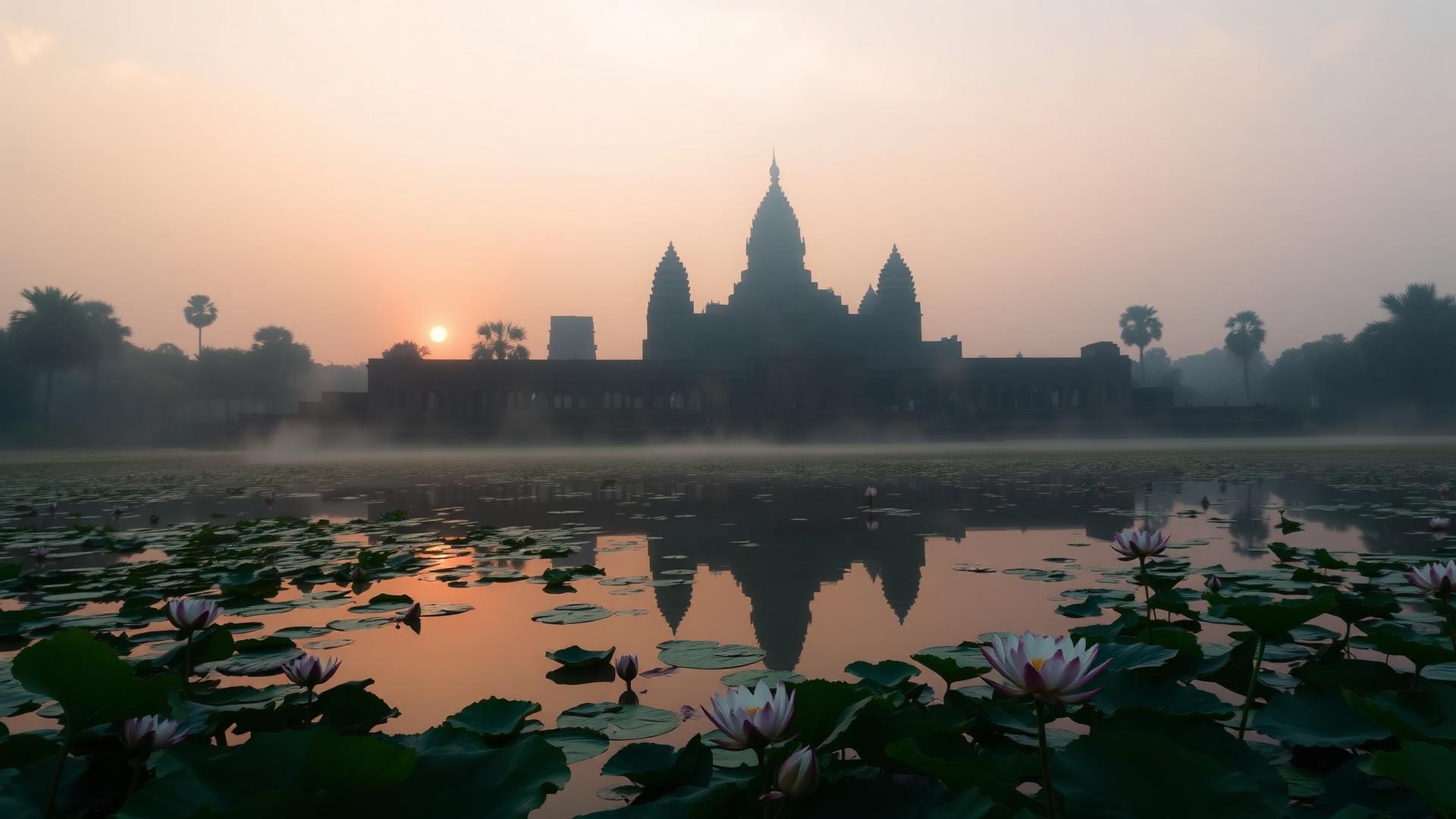
Angkor Wat itself is the icon: a five-towered temple-mountain surrounded by a moat, with bas-reliefs running for hundreds of metres. Angkor Thom, the walled city, holds the Bayon and its 200-odd serene stone faces, plus the Terrace of the Elephants.
Ta Prohm is the jungle temple, with silk-cotton roots swallowing the galleries. Further out, Banteay Srei has the finest carving in Cambodia in pink sandstone, and the remote Beng Mealea or the mountain-top Preah Vihear reward anyone with an extra day.
Passes and a smarter route
Buy a 1-day, 3-day or 7-day Angkor Pass at the official ticket centre (or online); the 3-day is the best value and can be used across a week. Passes bought after 5pm include that evening's sunset for free.
Everyone goes to Angkor Wat for sunrise on day one. Consider reversing it: visit Angkor Wat in the late afternoon when the west-facing towers glow and the crowds have gone, and take your sunrise at the Bayon or Srah Srang instead. Hire a tuk-tuk driver for the day, start at 5am, break during the punishing midday heat and return in the late afternoon.
Siem Reap and beyond the ruins
Siem Reap has grown into a genuinely good small city: the Old Market and Pub Street for evenings, excellent Khmer restaurants, Phare the Cambodian Circus, and the Angkor National Museum for context before you visit.
Out of town, the floating villages of the Tonlé Sap (Kampong Phluk is more authentic than Chong Kneas) shift with the lake's seasonal flood. Most travellers arrive from Bangkok: see the Thailand guide for pairing the two. Many also add Phnom Penh for the sobering Tuol Sleng and Choeung Ek memorials, or continue to the beaches at Koh Rong and Kampot.
Practicalities
Fly into Siem Reap-Angkor (SAI) or arrive overland from Bangkok or Phnom Penh. Most nationalities need an e-visa, easily arranged online before travel. The US dollar circulates alongside the riel; bring small notes.
Dress modestly: shoulders and knees covered is enforced at Angkor Wat's upper level. Carry far more water than you think, start early, and hire a licensed guide for at least one day; the reliefs are far richer with someone explaining them.
When to go & what it costs
November to February is the dry, cooler season and by far the most comfortable: it's also the busiest. March to May is brutally hot; the June-to-October rains bring green landscapes, full moats and fewer visitors, with showers usually short and afternoon-based.
Cambodia is inexpensive: allow roughly $60-110/day for two people including a comfortable hotel, meals, a tuk-tuk driver and guides, plus the pass itself (currently around $62 for three days).
Want to find more places like Cambodia (Angkor Wat & Siem Reap)?
Answer a few questions and get matched to 170+ destinations worldwide.
Find my matches