Sri Lanka
Sri Lanka fits an improbable amount into an island the size of Ireland: ancient capitals, misty tea hills, leopards, surf beaches and some of Asia's best food, all within a few hours' drive of each other. It is the rare long-haul trip that doesn't need internal flights.
December–March lands in winter for Sri Lanka: warm, sunny weather ideal for the coast; prime hiking and outdoor season with the trails and passes open; calm seas and swimmable water.
The cultural triangle
Start inland. Sigiriya is the icon: a sheer rock fortress with a fifth-century palace on top, frescoes halfway up and lion's paws at the stairs. Climb it at opening (7am) or take the quieter, cheaper Pidurangala rock opposite for the view of Sigiriya itself.
Nearby, the cave temples of Dambulla hold 150 Buddha statues under painted rock ceilings, and the ruined cities of Polonnaruwa and Anuradhapura are best explored by bicycle in the early morning. Kandy, the last royal capital, guards the Temple of the Sacred Tooth Relic; time an evening puja if you can, and dress modestly (shoulders and knees covered, shoes off) at every religious site.
Hill country and the train
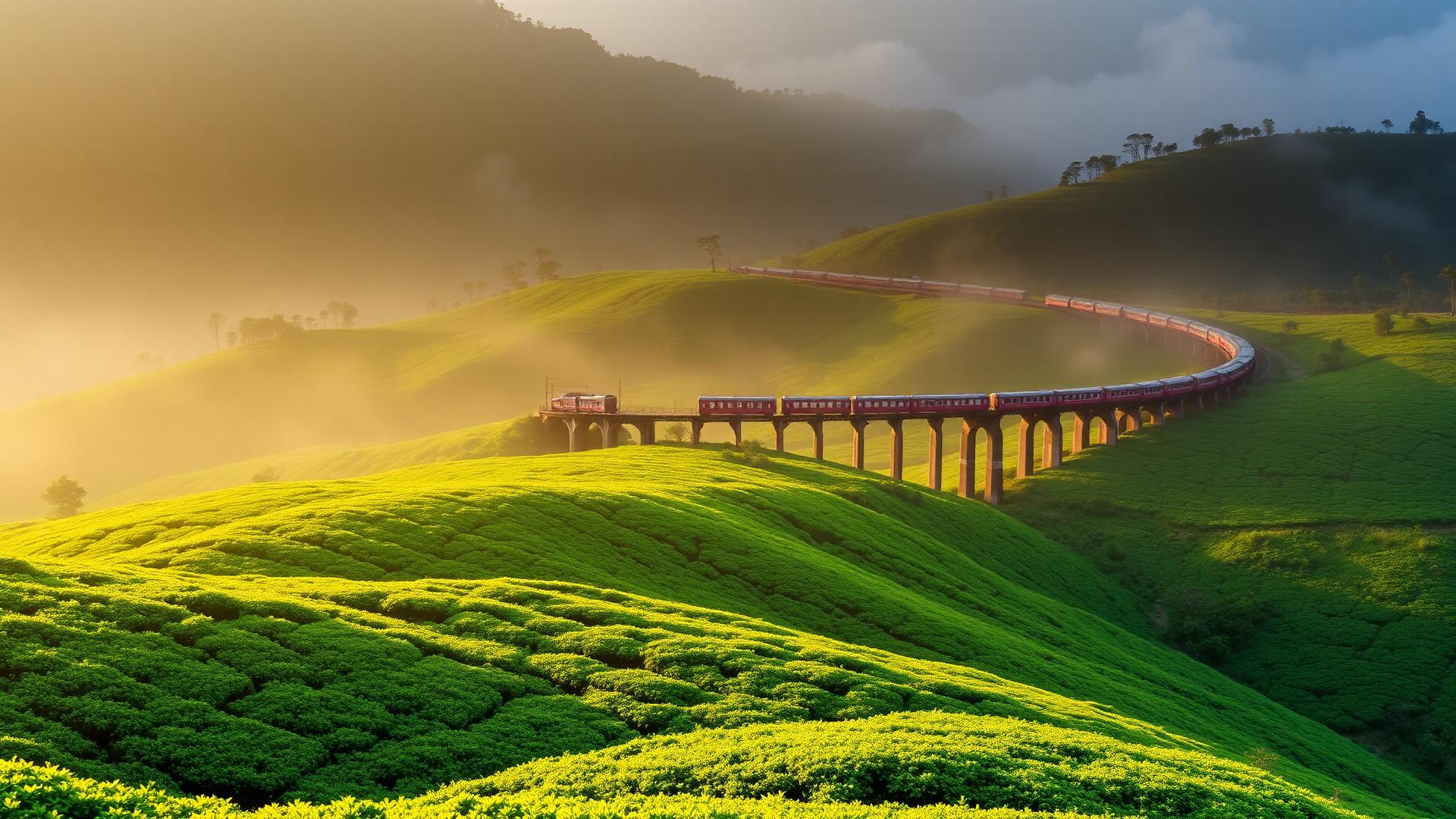
The Kandy to Ella train is famous for good reason: seven hours through tea estates, waterfalls and cloud, with the doorway seats taken by everyone with a camera. Book reserved seats a month ahead, or ride second-class unreserved and take your chances standing. The Nanu Oya to Ella stretch is the prettiest if you're short on time.
Nuwara Eliya is the colonial hill station with a distinctly odd English-village feel and working estates like Pedro where you can walk the rows and see the factory. Ella is the backpacker hub: Little Adam's Peak at sunrise, the Nine Arch Bridge, and the seriously worthwhile Horton Plains hike to World's End, which must be done at dawn before the cloud rolls in. Bring a fleece; the highlands drop to single digits at night.
For the pilgrimage version, Adam's Peak is climbed overnight by thousands during the December to May season, arriving on the summit for sunrise and the mountain's own triangular shadow.
Wildlife
Yala National Park has the densest leopard population on earth, and Block 1 delivers sightings often enough that people build trips around it, at the cost of jeep traffic. Wilpattu in the northwest is bigger, quieter and better for a slower safari, while Udawalawe is the reliable elephant park, with hundreds of them and open country that makes them easy to see.
Between July and September the Minneriya-Kaudulla gathering brings hundreds of elephants to the receding reservoir, one of Asia's great wildlife spectacles. Offshore, Mirissa runs blue whale trips from November to April; choose an operator that keeps distance, and skip anything advertising elephant rides or orphanage photo ops.
Which coast, and when
Sri Lanka has two monsoons, which is why timing is everything. The south and west coasts (Mirissa, Unawatuna, Hikkaduwa, the Dutch colonial walled town of Galle) are best December to March, when the east is wet. The east coast (Arugam Bay for surf, Trincomalee and Nilaveli for calm water and snorkelling around Pigeon Island) flips to May to September.
Surfers should aim at Arugam Bay in the southern summer and Weligama or Hikkaduwa in winter; beginners find Weligama's forgiving beach break the easiest place to start. Galle Fort deserves at least one night rather than a day stop: the ramparts at sunset, and boutique hotels inside 400-year-old merchant houses.
Food and practicalities
Rice and curry is the national meal and nothing like the single-dish version abroad: a plate of rice ringed by five or ten small curries, dhal, coconut sambol, jackfruit, beetroot, and something fiercely chilli-hot. Add hoppers (bowl-shaped fermented pancakes, ideally with an egg in the middle) for breakfast, kottu roti chopped on a hot plate for late night, and short eats from bus-station stalls.
Getting around: trains for the hills and the coast, and a car with driver for everything else, which costs far less than in Europe and saves whole days. Distances look tiny but roads are slow; assume 40 km/h averages. Most nationalities need an ETA visa applied for online in advance. Sri Lanka is one of the best-value long-haul destinations going: comfortable guesthouses run a fraction of European prices, and even upmarket tea-estate bungalows are attainable. Two weeks is the right length for triangle, hills, one park and one coast.
Want to find more places like Sri Lanka?
Answer a few questions and get matched to 170+ destinations worldwide.
Find my matches