Amsterdam
A small city that rewards slowness: seventeenth-century canals, three genuinely world-class museums and a bike-first way of moving that changes how you see the place.
April–September lands in summer for Amsterdam: mild, comfortable temperatures.
The canal ring and where to stay
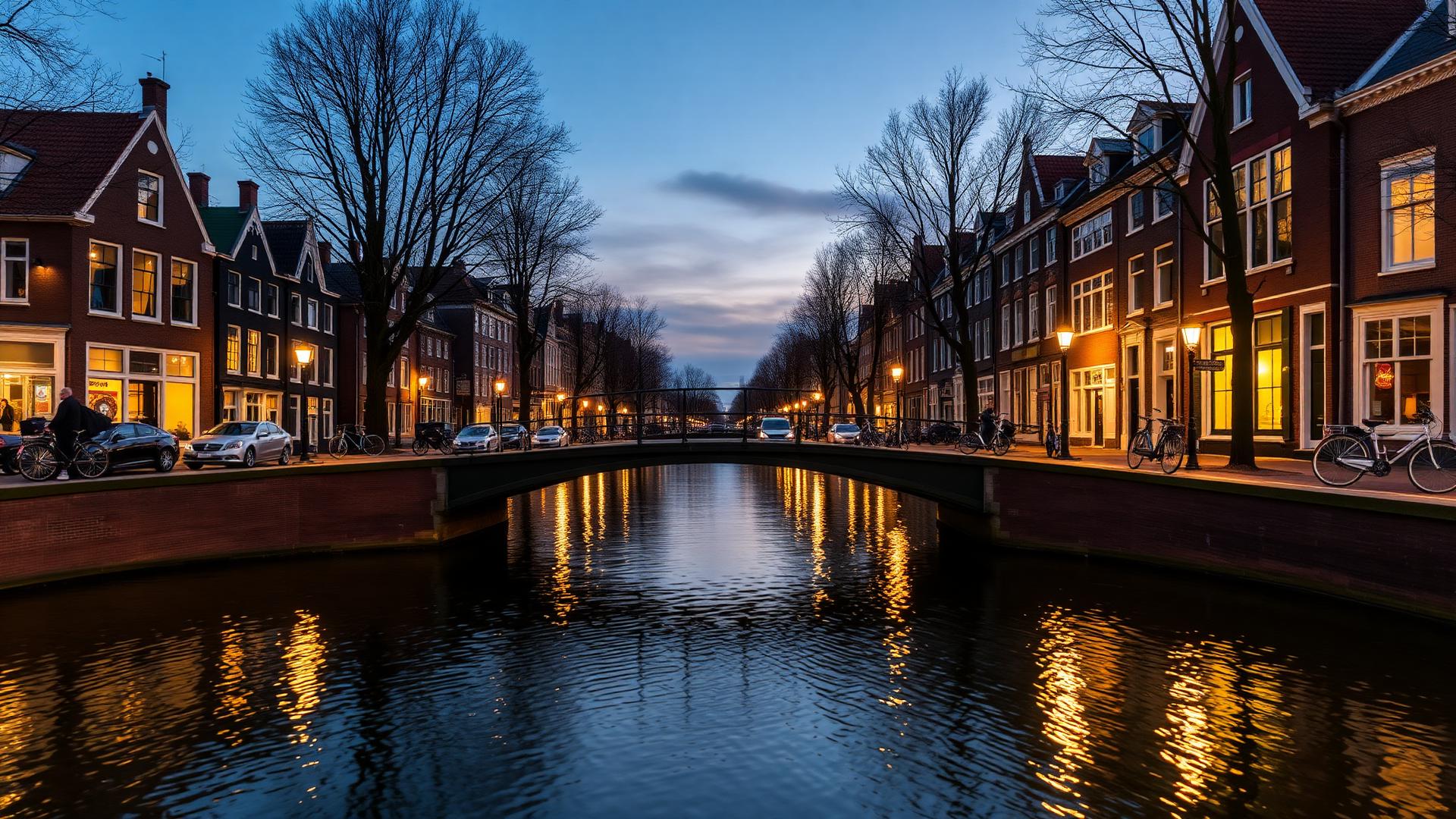
The UNESCO-listed grachtengordel, Herengracht, Keizersgracht, Prinsengracht, is the heart of it. The Jordaan just west is the prettiest and quietest base; De Pijp is younger, with the Albert Cuyp market and the best-value restaurants; Oost and Noord are cheaper and increasingly where locals go out. Avoid booking directly on the Red Light District streets unless you want noise until 4am.
The centre is walkable end to end in 40 minutes. Noord is a free two-minute ferry behind Centraal Station and worth the trip for NDSM's post-industrial art scene and the A'DAM Lookout swing.
Museums: book, or don't bother
The Rijksmuseum needs half a day. Vermeer, the Night Watch, Delftware, ship models. The Van Gogh Museum is timed-entry only and sells out days ahead in summer. The Anne Frank House releases tickets online six weeks in advance and sells out within hours; there is no walk-up queue.
Quieter and excellent: the Stedelijk for modern art, Museum Het Rembrandthuis, the Willet-Holthuysen canal house for how these homes actually worked, and the Scheepvaartmuseum for the maritime empire that paid for all of it.
Cycling and canals
Rent a bike, but treat the bike lanes as roads: keep right, signal with your arm, never stop in the lane, and give way to trams always. A ride through Vondelpark, out to the Amstel river past the windmill at Riekermolen, and back through De Pijp is a perfect two-hour loop.
For the water, skip the mega glass boats. A small open canal boat, an electric self-drive sloep, or the free Buiksloterweg ferry all beat the tourist fleet. Evening is the best light, when the bridges are lit.
Eating and drinking
Dutch food is better than its reputation: bitterballen in a brown café, fresh herring from a street cart, stroopwafels pressed to order at Albert Cuyp, and apple pie at Winkel 43. Indonesian food is the real local cuisine, a rijsttafel at Blauw or Sampurna is the classic big meal.
Brown cafés (Café Chris, De Sluyswacht, 't Smalle) are the drinking culture: old wood, small beers, no music. For food halls try Foodhallen in Oud-West; for markets, Albert Cuyp on weekdays and Noordermarkt on Saturday mornings.
Day trips
Trains make the whole country a day trip. Haarlem (15 min) is Amsterdam without the crowds. Utrecht (25 min) has canal-level wharf cafés. Zaanse Schans (17 min plus a walk) gives you working windmills; Kinderdijk is better but further.
Spring only: Keukenhof tulip gardens run roughly mid-March to mid-May, so go on a weekday, early, by direct bus from Schiphol. Summer: the beach at Zandvoort is 30 minutes by direct train.
For another canal city with an entirely different mood, see the Venice guide, or hop the three-hour train to Belgium.
Practicalities
April–May (tulips, mild, long light) and September are the sweet spots. June–August is busy and hotel prices spike. Winter is dark and wet but the museums are empty and the brown cafés come into their own.
Card and phone payments are near-universal: many places refuse cash entirely, and some don't take non-European credit cards, so carry a debit card with Maestro if you can. Public transport uses contactless tap-in/tap-out at gates and on trams.
Three days is enough for the core; four lets you add Noord and a day trip without rushing.
Want to find more places like Amsterdam?
Answer a few questions and get matched to 170+ destinations worldwide.
Find my matches