Madrid
Madrid has no beach, no cathedral worth queueing for and no canals: it has the best art mile in Europe, the best eating hours, and a city that genuinely doesn't go to bed. It's a place you like more the longer you stay.
March–May and September–November are the two windows that work best for Madrid: hot temperatures without the peak humidity. The months in between are skipped; they're the peak-season extremes for Madrid.
The art mile
The Prado is the reason to come: Velázquez's Las Meninas, Goya's black paintings, Bosch's Garden of Earthly Delights. Two hours with a plan beats five wandering; entry is free the last two hours daily and the queue reflects that.
The Reina Sofía holds Picasso's Guernica along with Dalí and Miró - free from 7pm most evenings. The Thyssen-Bornemisza fills the gaps in both with a superb private collection, and is the least crowded of the three. The combined Paseo del Arte ticket covers all three.
Add the Royal Palace (Europe's largest by floor area) and the small, weird Sorolla Museum in the painter's own house.
Neighbourhoods
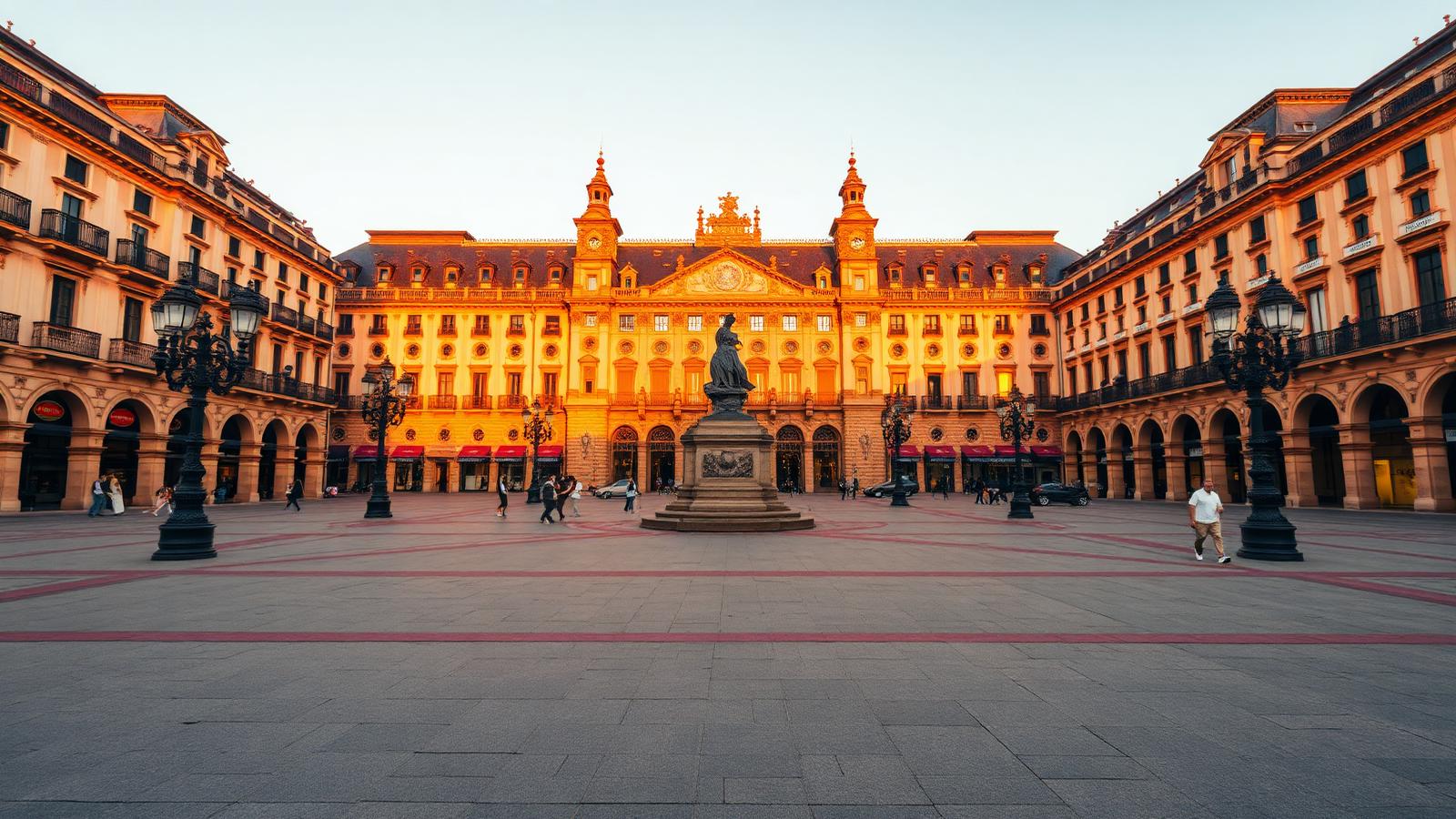
Sol is the centre, literally: Puerta del Sol is the official kilometre zero of Spain's roads, the New Year's Eve clock and the bear-and-strawberry-tree statue. From here you're two minutes' walk to the Plaza Mayor, the grand arcaded square commissioned by Philip III in 1617, still the city's living room for a coffee, a calamari sandwich or just standing about. Come at dawn to have the arcades almost to yourself. This is the heart of Madrid, and everything else radiates out from it.
La Latina for Sunday: the Rastro flea market in the morning, then vermouth and tapas along Cava Baja. Malasaña for the movida legacy: record shops, vintage, bars. Chueca for the nightlife and the best-dressed streets. Lavapiés for Indian, Senegalese and Moroccan food and a genuinely mixed crowd. Salamanca for money and quiet, grand streets.
Green space matters here: Retiro Park with its rowing lake and the glass Palacio de Cristal, the Templo de Debod (an actual Egyptian temple) for the best sunset in the city, and Casa de Campo if you want scale.
Eating and drinking
Madrid is not a free-tapa city like Granada: you order and pay, and the quality is higher for it. Non-negotiables: jamón ibérico de bellota, tortilla (runny in the middle, argue about it), bocadillo de calamares near Plaza Mayor, cocido madrileño (a three-course chickpea stew, a full lunch and a lie-down), callos, and churros with chocolate at 3am from San Ginés.
Mercado de San Miguel is pretty and overpriced; Mercado de San Fernando or Antón Martín are where you actually eat. Vermouth on tap before lunch is the local ritual.
The hours are real: lunch 2–4pm, dinner from 9.30pm, bars until 3am, clubs later. Fighting this makes for a bad trip.
Football and the Bernabéu
Real Madrid at the rebuilt Santiago Bernabéu is a spectacle even at a midweek league game; tickets go on sale a couple of weeks out on the club site. The stadium tour is excellent and includes the trophy room.
Atlético at the Metropolitano is the cheaper ticket with the better atmosphere, and many locals will tell you it's the more honest club. Watching either in a peña bar with the neighbourhood is a fine substitute.
Practicalities and day trips
April–June and September–November are the sweet spot. July and August regularly exceed 38 °C and the city empties; December–February is cold, dry and bright.
The metro is fast, cheap and reaches the airport; the centre is walkable. High-speed trains put Toledo (33 min), Segovia (28 min, for the Roman aqueduct and the castle) and Córdoba or Seville within a day or an easy onward leg: see the Andalusia guide. For the island version of Spanish nightlife, see Ibiza.
Want to find more places like Madrid?
Answer a few questions and get matched to 170+ destinations worldwide.
Find my matches