Rome
Three thousand years stacked on one another, and a food culture that hasn't budged in a century. Rome is dense: plan less than you think and eat more than you planned.
April–May and September–October are the two windows that work best for Rome: hot temperatures without the peak humidity. The months in between are skipped; they're the peak-season extremes for Rome.
Ancient Rome
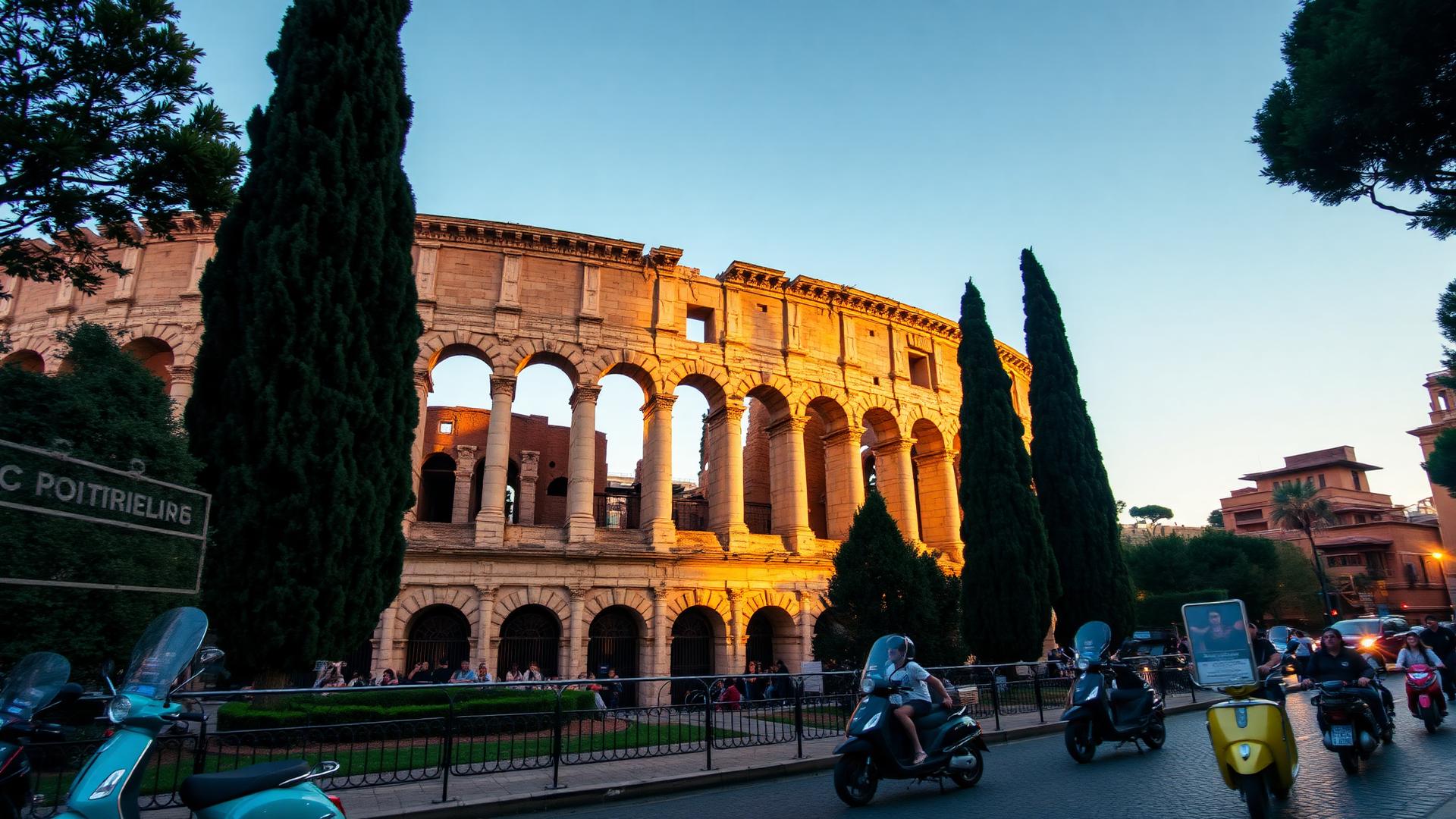
The Colosseum, Roman Forum and Palatine Hill share one timed ticket booked online; entry slots sell out days ahead. Go first thing, do the Colosseum, then walk down into the Forum and up the Palatine for the view. Add the arena-floor or underground upgrade only if you're genuinely interested: it's a separate, scarcer ticket.
The Pantheon (now ticketed, cheap) is the best-preserved building of the ancient world and takes 20 minutes. Ostia Antica, 40 minutes by train, is a whole Roman port town with almost no crowds, the better version of Pompeii for anyone based in Rome.
The layering is the point: San Clemente stacks a twelfth-century basilica on a fourth-century church on a Mithraic temple, all visitable in one descent.
The Vatican
St Peter's Basilica is free; the queue is security, not tickets, so arrive at opening or late afternoon. Climbing the dome is a separate small fee and worth the 551 steps.
The Vatican Museums require a booked timed slot. The route to the Sistine Chapel is a one-way kilometre: pace yourself, and consider an early-entry or Friday-evening slot in summer. Dress code is enforced across the whole complex: shoulders and knees covered.
Nearby, Castel Sant'Angelo is a quieter fortress with the best rooftop view back over the Tiber.
Neighbourhoods and walking
Centro Storico covers the Pantheon, Piazza Navona and the Trevi Fountain, all walkable and best before 9am. Trastevere across the river is the evening neighbourhood: cobbles, ivy, packed trattorias. Monti near the Forum is smaller and more local. Testaccio is the working-class food quarter and the honest answer to "where do Romans actually eat?".
Rome is a walking city with two useful metro lines. Buses are frequent and unpredictable; taxis must be taken from ranks, not hailed.
Eating like a Roman
Four pastas define the city: cacio e pepe, carbonara, amatriciana and gricia. Also carciofi alla giudia (fried artichokes, in the Jewish Ghetto, best January–April), saltimbocca, trapizzino and supplì for street food, and pizza al taglio by weight at lunch.
Rules that matter: coffee standing at the bar costs a third of the table price, cappuccino stops at 11am, and any restaurant with a photo menu near a monument should be walked past. Book dinner in Trastevere and Testaccio, the good places fill by 8.30pm.
For the southern-Italian version of all this, see the Puglia guide or the Sicily guide; Venice is 3.5 hours by fast train.
Practicalities
April–May and late September–October are the best months: warm, long evenings, tolerable queues. July–August is 35°C+ with peak crowds and many family-run restaurants closed for ferragosto. Winter is genuinely pleasant: cool, bright and half-empty.
Book the Colosseum and Vatican Museums the moment your dates are fixed. Carry a refillable bottle: the city's nasoni drinking fountains run cold and free everywhere.
Three full days covers the headline sights; four or five is the difference between ticking off Rome and enjoying it.
Want to find more places like Rome?
Answer a few questions and get matched to 170+ destinations worldwide.
Find my matches