Prague
Prague survived the 20th century architecturally intact, which is why a walk here runs from Gothic to Baroque to Art Nouveau to Cubism inside twenty minutes. The trick is getting up early enough to have it to yourself.
April–June and September–October are the two windows that work best for Prague: hot temperatures without the peak humidity. The months in between are skipped; they're the peak-season extremes for Prague.
Old Town and the bridge
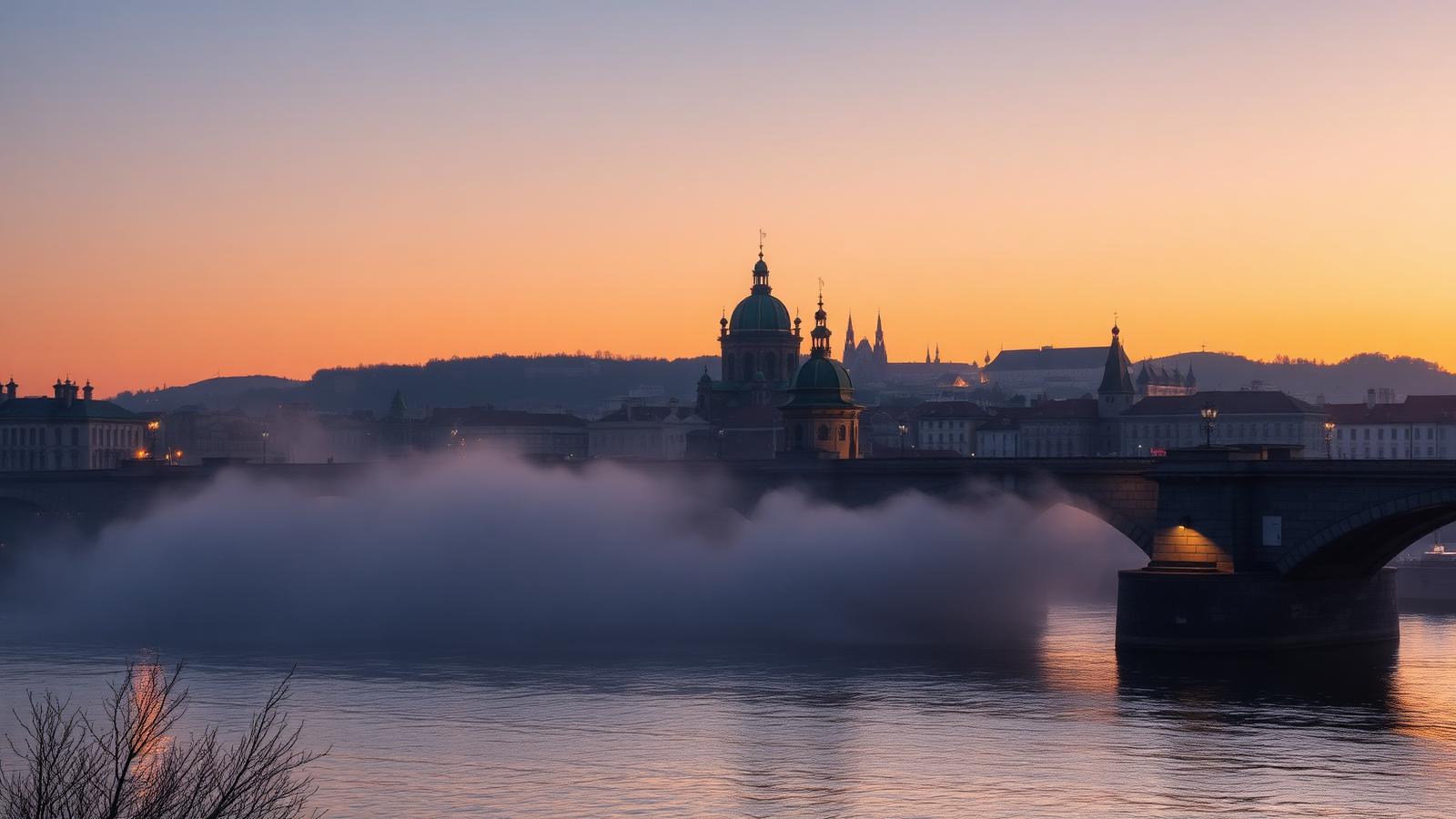
Charles Bridge is genuinely magical at 6am and a crush by ten, this is the single biggest quality-of-trip decision you'll make. Same for Old Town Square: see the Astronomical Clock's hourly show once (it's underwhelming, the crowd is the spectacle), then climb the Old Town Hall Tower for the rooftops.
Around it: the Municipal House for full-blown Art Nouveau (café and a Mucha room), the Jewish Quarter (Josefov) with six synagogues and the extraordinary layered Old Jewish Cemetery on one combined ticket, and the Klementinum baroque library.
The Castle and Malá Strana
Prague Castle is a walled district, not a building: St Vitus Cathedral (free in the rear nave, ticketed for the good part), the Old Royal Palace, St George's Basilica and Golden Lane. Enter from the top at Pohořelec via tram 22 and walk down: it saves the climb and reverses the tour-group flow.
Below it, Malá Strana is baroque palaces, hidden gardens and the Lennon Wall. Petřín Hill has a funicular, a mini Eiffel tower and the best view; the Vrtba and Wallenstein gardens are quiet in high season.
Across the river, Vyšehrad fortress is where locals go for the view and the cemetery of Czech composers: almost no tourists.
Modern Prague
New Town covers Wenceslas Square and the 1968 and 1989 history around it, plus the Mucha Museum and the Dancing House. The Cubist architecture trail (House of the Black Madonna, the villas under Vyšehrad) is unique to Prague: no other city built cubist buildings.
Holešovice and Karlín are the reclaimed-industrial neighbourhoods: DOX contemporary art, breweries, and where to eat if you've had enough of the centre. Žižkov has the TV tower with crawling baby sculptures and the highest pub density in Europe.
Beer, properly
Czech beer culture is about tank and unpasteurised lager served with a thick wet foam head, not novelty. Ask for a hladinka (standard pour) or try a mlíko (almost all foam, sweet, a local joke you should get once). Classic pubs: U Zlatého Tygra, U Slovanské Lípy, Lokál. Prices in a real pub are a third of Old Town Square.
Food to eat: svíčková (beef in cream sauce with dumplings), guláš, roast duck with red cabbage, smažený sýr, and chlebíčky open sandwiches from a deli. Skip the Old Town 'trdelník': it's not Czech.
Practicalities and day trips
April–June and September–October are best; winter is cold, atmospheric and cheap, with strong Christmas markets. Trams and metro cover the city and are excellent; buy a 24/72-hour pass and validate it.
Pay in Czech crowns, decline dynamic currency conversion, and change money only at reputable exchanges (never the 0% commission booths). Beware overpriced 'tourist menus' immediately around the square.
Day trips: Kutná Hora (the bone chapel and a stunning Gothic cathedral, 1 hour by train), Český Krumlov (3 hours, better as an overnight), Terezín for the ghetto memorial. Trains to Vienna take 4 hours, and Budapest makes an easy third stop.
Want to find more places like Prague?
Answer a few questions and get matched to 170+ destinations worldwide.
Find my matches