Chilean Atacama Desert
The Atacama is the driest desert on Earth, a high-altitude world of salt flats, volcanoes and skies so clear that the planet's biggest telescopes are built here. Everything clusters around the adobe town of San Pedro de Atacama, and the stargazing alone is worth the flight.
April–October lands in the southern winter for Chilean Atacama Desert: hot temperatures without the peak humidity; prime hiking and outdoor season with the trails and passes open.
The lay of the land
San Pedro de Atacama (2,400 m) is the only real base. A small town of adobe walls, dusty streets and shaded courtyards, it sits at the western edge of the desert where the Andes rear up to the east and the Pacific hides beyond the coastal range to the west. Every classic sight, from geysers to salt lagoons, is a day trip from here.
The desert itself is a rain shadow twice over. Moisture from both the Pacific and the Atlantic is squeezed out by the mountains before it arrives, and parts of the Atacama have gone without meaningful rain for decades. What makes it unforgettable is the contrast: at 4,000 m, the driest place on Earth is dotted with flamingo-filled lagoons fed by Andean snowmelt.
The classic circuit
Valle de la Luna is the closest and most iconic stop, a badlands of salt-sculpted rock and giant dunes 15 km from town. Go in late afternoon, when the light turns the valley ochre and red, and stay for sunset from the dune that gives it its name. You are watching the sun go down over a landscape NASA has used to test Mars rovers.
El Tatio geysers mean a 4:30 am start. The geyser field sits at 4,320 m, and the cold of dawn is what makes the steam columns spectacular; it is well below freezing up there until the sun clears the mountains, so bring every layer you own. The morning light on the steaming basins, with llamas grazing between them, is one of the great desert spectacles.
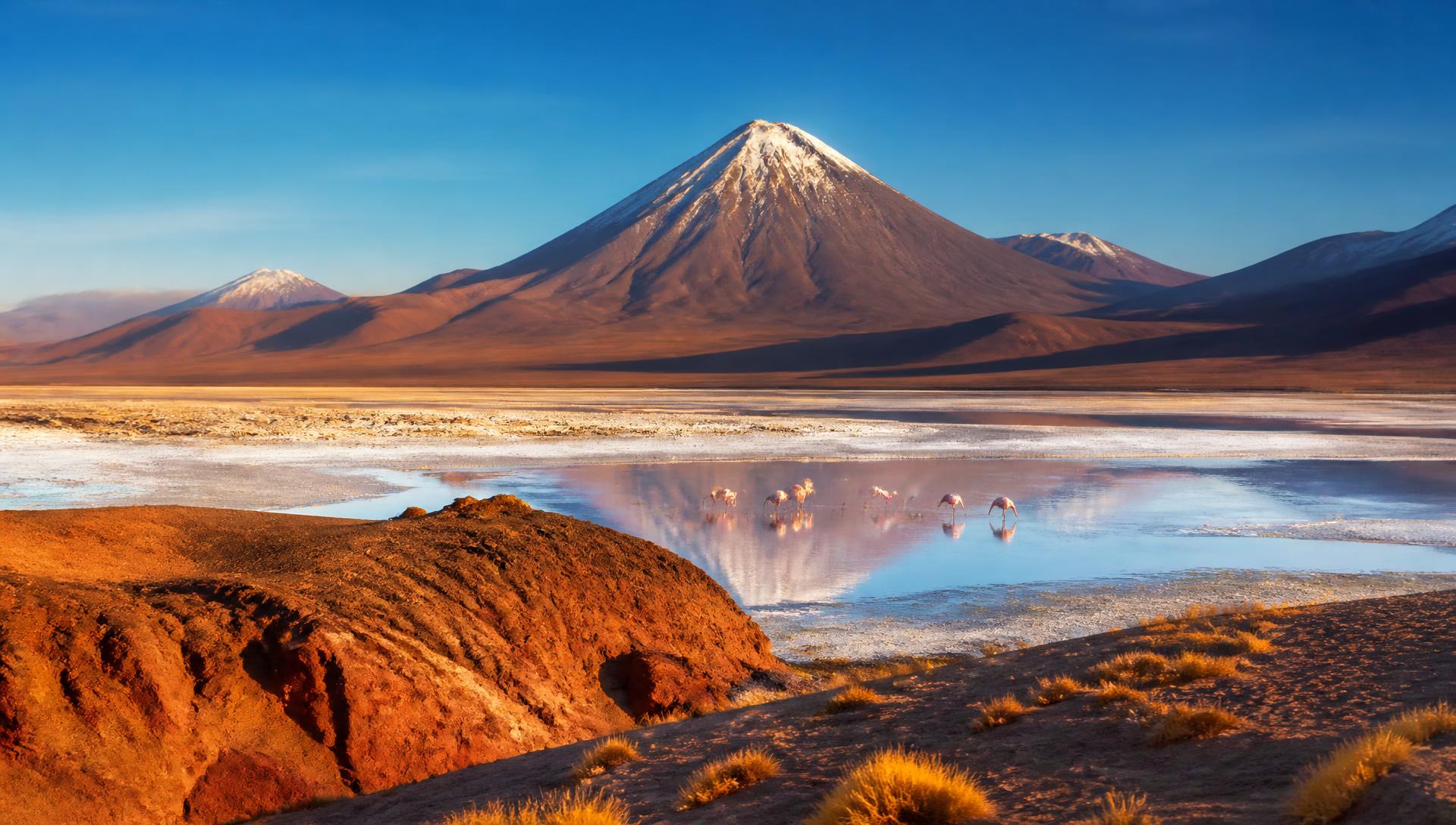
The Salar de Atacama, the biggest salt flat in Chile and the third largest on Earth, is where you find the Chaxa lagoon and its pink James and Andean flamingos against white salt, with the Licancabur volcano behind them. Miscanti and Miñiques, two high lagoons on the altiplano at 4,200 m, are quieter and almost absurdly blue, and Piedras Rojas nearby is a rust-red rock field. Any tour company in San Pedro strings these together into a long day.
The best stargazing on Earth
The Atacama has more than 300 cloudless nights a year, sits at altitude with exceptionally dry air, and is a hundred kilometres from meaningful light pollution. That combination is why ALMA, the world's largest ground-based telescope project, operates here, and why astronomers rate the region the best place on the planet to look up.
You do not need a telescope. The night sky over San Pedro is so rich that a simple star tour with a laser pointer and a good guide is a highlight of most trips, covering the Milky Way, the Magellanic Clouds (only visible from the southern hemisphere) and the planets. For the serious version, book a session at one of the private observatories outside town or visit the ALMA visitor centre. The weeks around the new moon are best; check the lunar calendar before booking flights, because a full moon washes everything out.
Altitude and the high plateau
San Pedro sits at 2,400 m and the tour circuit runs at 4,000 to 4,800 m, which is real altitude. Most people feel it as a headache and shortness of breath rather than anything dramatic, but pace yourself: sleep in San Pedro rather than at the lagoons, and keep the first day gentle. Mate de coca, the local tea offered at every breakfast buffet, genuinely helps.
The dry season runs roughly April to October, which is also the best window for the lagoons and for stargazing. Nights are cold at altitude, below freezing at El Tatio even in summer. From December to March the altiplano gets its 'Bolivian winter' rains: the desert floor stays dry, but passes and lagoon roads can close, and it is the least rewarding time for the classic circuit. Be aware that snow might cause closures in the winter months (June - August).
Eating and staying in San Pedro
San Pedro's old centre is tiny and runs on tourism: tour agencies, empanada stalls, coffee shops and restaurants serving llama steaks, quinoa salads and excellent Chilean wine and pisco sours. Budget travellers do fine with hostels and street food; at the other end sit serious desert lodges with private plunge pools and wine cellars. Book accommodation early for the July and August peak and for the new moon stargazing windows.
Meals follow tour timings: a big early breakfast before the 4:30 am departures, a late lunch after you return, and dinner whenever the day trip ends. The town's restaurants are genuinely good for somewhere this remote, but the menu is limited enough that eating well takes a little planning.
Practicalities
Fly into Calama (CJC), about an hour's drive from San Pedro. Transfers are easy to arrange, or you can rent a car, though most visitors take tours: the road to El Tatio is rough, the altiplano tracks need a 4x4, and a guide handles the dawn timing and permits. Fill the tank in town, because distances are deceptive.
The weather does the opposite of what you expect: intensely sunny and dry by day, freezing at night, and the sun at altitude burns fast. Bring layers, lip balm, sunscreen and a hat, and drink water constantly. Cards are widely accepted in town, but carry cash for markets and remote stops. The desert itself is safe; the altitude and the distances are the real risks, so take the acclimatisation advice seriously.
San Pedro is the natural springboard for a longer South America trip. The three-day jeep crossing over the border to the Salar de Uyuni in Bolivia is the classic add-on, or you can fly south for Patagonia's mountains, north to Peru and Machu Picchu, or west to Easter Island. Each deserves a trip of its own, so pick one and give it time.
Want to find more places like Chilean Atacama Desert?
Answer a few questions and get matched to 170+ destinations worldwide.
Find my matches