Eastern China
Eastern China is where the country's two extremes sit side by side: 600-year-old imperial courtyards and the Great Wall on mountain ridges, an hour from bullet trains and skylines that make most cities look provincial. High-speed rail makes stitching it together genuinely easy.
September–October lands in autumn for Eastern China: warm, sunny weather ideal for the coast; prime hiking and outdoor season with the trails and passes open; calm seas and swimmable water.
Beijing and the imperial core
Give Beijing three or four days. The Forbidden City needs a booked timed ticket and half a day; enter from the south and exit north into Jingshan Park for the rooftop view that explains the whole layout. The Temple of Heaven at dawn is full of locals doing tai chi, ballroom dancing and sword forms, the best free show in the city.
Add the Summer Palace lake and long corridor, the Lama Temple, and a walk through the surviving hutong lanes around Nanluoguxiang and Dashilar, ideally by bike. Tiananmen Square requires ID and a security queue.
Choosing a Great Wall section
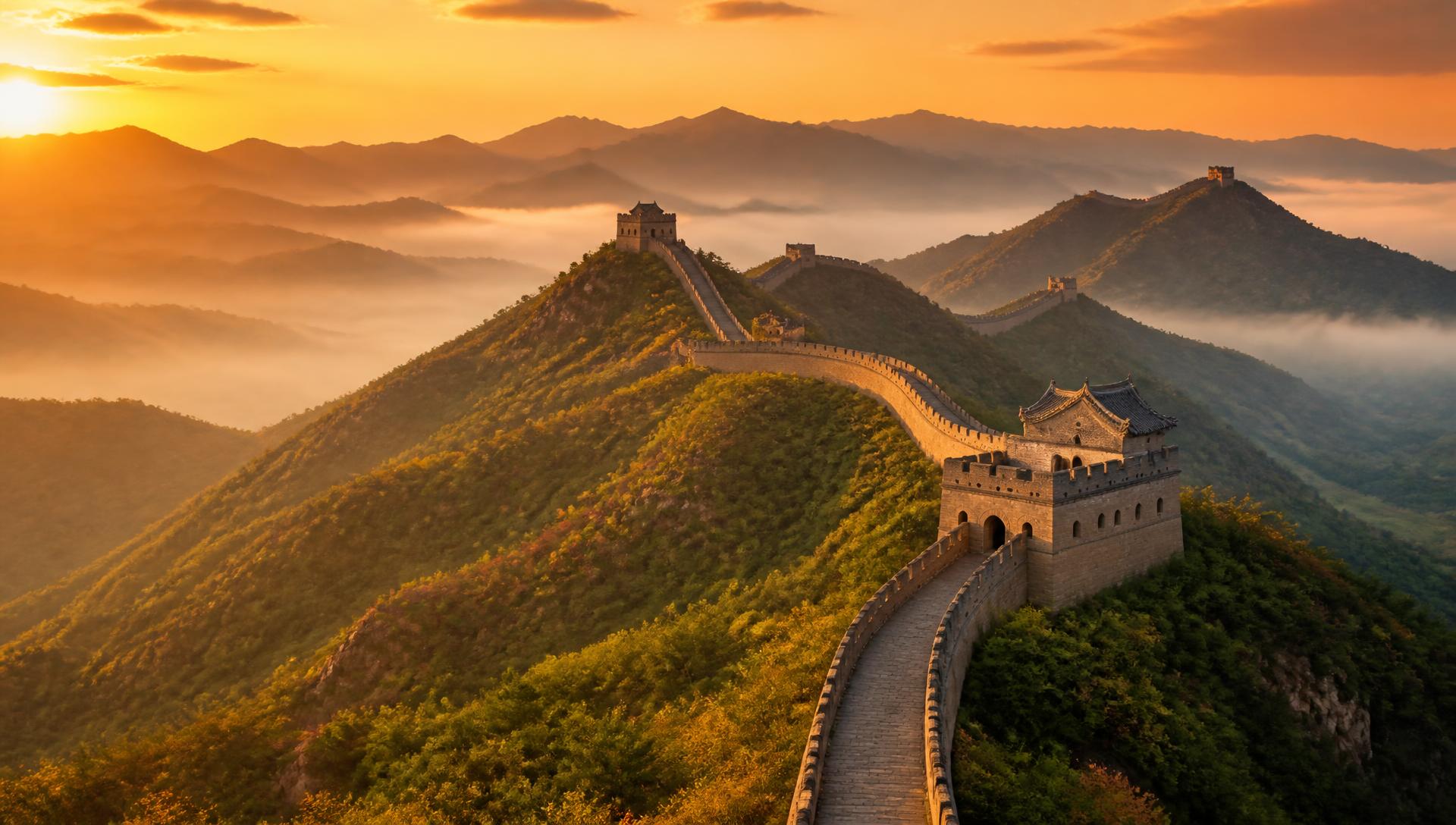
The Wall is not one place, and the section you pick decides your day. Mutianyu is restored, has a cable car and toboggan, and is the easy, family-friendly choice. Jinshanling is the photographer's pick: partly restored, dramatically undulating, far fewer people, about three hours from the city.
Jiankou and Gubeikou are unrestored and steep, with loose brick and no railings: go with a guide. Badaling is the closest and by far the most crowded; skip it unless time is very short.
Whichever you choose, start early, bring water and expect real stair climbing. A private driver for the day costs little more than a tour and lets you leave at 6am.
Xi'an and the Terracotta Army
Five hours by bullet train from Beijing (or a short flight). The Terracotta Warriors are a bucket-list stop. Pit 1 is the one everyone photographs, but the museum's bronze chariots deserve the time. Back in the city, cycle the full 14 km circuit on top of the Ming city walls, then eat your way through the Muslim Quarter: hand-pulled biang biang noodles, roujiamo lamb burgers, persimmon cakes.
Shanghai and the water towns
Shanghai is the modern counterweight: the colonial Bund facing the Pudong skyline, the art-deco former French Concession for walking and coffee, the excellent Shanghai Museum, and a viewing deck in the Shanghai Tower if the smog cooperates. Nightlife and food here are world class and expensive by Chinese standards.
Day trips from Shanghai: Suzhou for classical scholar gardens and canals (Humble Administrator's Garden, the Lingering Garden), Hangzhou for the West Lake and the tea terraces at Longjing, and the canal towns of Zhujiajiao or Wuzhen for the postcard version: both busy, so go on a weekday.
Eating
Regional cuisines shift with every train. Beijing means Peking duck carved at the table, plus dumplings, sesame flatbreads and hotpot in winter. Shanghai leans sweet and soy-rich: xiaolongbao soup dumplings, red-braised pork, hairy crab in autumn. Suzhou and Hangzhou do delicate freshwater fish and Longjing shrimp.
Practical tips: mobile payment rules everywhere, so link a foreign card to Alipay or WeChat Pay before you arrive, since cash is accepted but awkward. Translation apps and a photo menu save a lot of guesswork.
Practicalities
September–October is the best window: dry, mild, clear skies and autumn colour on the Wall. April–May is the second-best. Avoid July–August (hot, humid, heavy domestic travel) and the national holidays around 1-7 October and Chinese New Year, when everything is packed and trains sell out weeks ahead.
Visas: most Western passports need a tourist visa, though a growing list of European nationalities can now enter visa-free for short stays, and 240-hour transit exemptions apply at major airports, so check current rules before booking.
Getting around: high-speed rail is the way to travel. Beijing–Xi'an is about 4.5-6 hours, Beijing–Shanghai 4.5 hours. Book through the official Railway 12306 app or an agent, and carry your passport: it is your ticket.
Internet: Google, WhatsApp and most Western social apps are blocked. Set up a VPN before you land, and download offline maps.
For Japan's equivalent rail-and-temples trip, see the Honshu guide and the Kyoto guide.
Want to find more places like Eastern China?
Answer a few questions and get matched to 170+ destinations worldwide.
Find my matches