KwaZulu-Natal & Lesotho
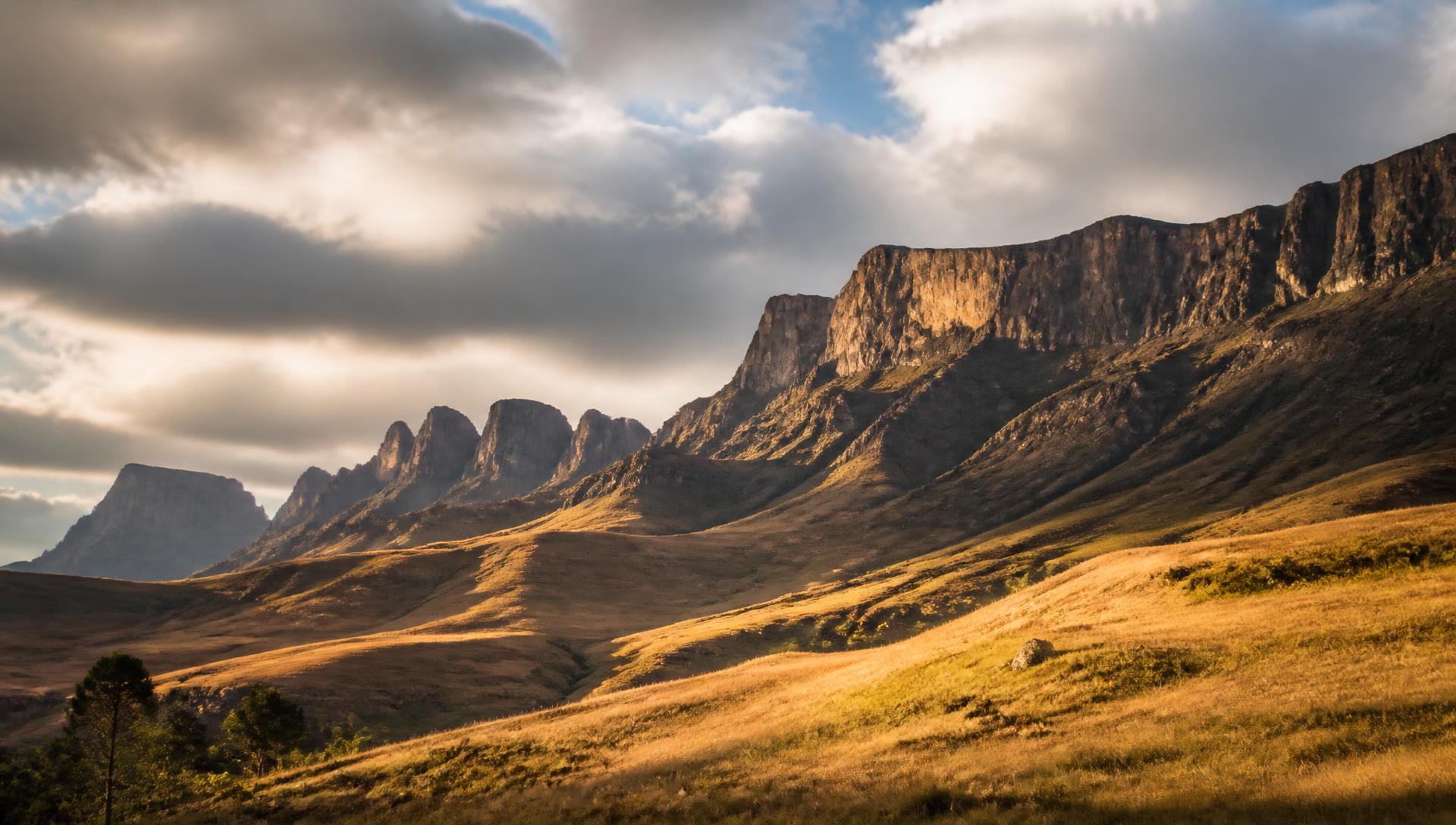
This is South Africa's most underrated corner: a 200 km wall of basalt peaks, a malaria-free Big Five park with the continent's best rhino record, subtropical wetlands on the Indian Ocean, and, over the escarpment, an entire mountain kingdom most visitors never reach.
March–May and September–November are the two windows that work best for KwaZulu-Natal & Lesotho: warm, sunny weather ideal for the coast; prime hiking and outdoor season with the trails and passes open; calm seas and swimmable water. The months in between are skipped; they're the peak-season extremes for KwaZulu-Natal & Lesotho.
The Drakensberg
The uKhahlamba-Drakensberg, 'barrier of spears', is a UNESCO World Heritage Site for both its landscape and its San rock art, some of it 3,000 years old. Three bases cover it. The Northern Berg holds the Amphitheatre, a 5 km cliff wall with Tugela Falls dropping off the top; the chain-ladder route from Sentinel car park is the classic day hike.
The Central Berg (Champagne Valley, Monk's Cowl, Giant's Castle) has the widest range of day walks and the best-known rock-art shelters at Giant's Castle and Kamberg. The Southern Berg around Underberg is quieter, greener and the gateway to Lesotho.
Hikes run from gentle river walks to serious multi-day escarpment traverses. Weather turns fast: afternoon thunderstorms in summer, snow on the tops in winter, so start early and register at the park office.
Over the Sani Pass into Lesotho
The Sani Pass climbs from Underberg to 2,876 m in a series of hairpins to the Lesotho border. The South African side is now largely tarred, but the top section remains rough and a 4×4 is required - most visitors take a guided day tour, which handles the two border posts (bring your passport).
At the top sits the Sani Mountain Lodge, marketed as the highest pub in Africa, with a view straight back down the escarpment. Beyond it, Lesotho opens out: Thabana Ntlenyana, the highest peak in southern Africa, is a walk from here.
With more time, drive deeper into the kingdom. Semonkong has the 192 m Maletsunyane Falls and the world's longest commercial abseil; Malealea and Roma are the classic bases for pony trekking to villages, and Ts'ehlanyane National Park and the Katse Dam are worth the winding roads. Lesotho is genuinely high: most of it above 1,800 m, so expect cold nights year-round.
Wildlife: Hluhluwe-iMfolozi and the coast
Hluhluwe-iMfolozi is the oldest proclaimed park in Africa and the place that saved the white rhino from extinction. It is Big Five, malaria-free and self-drive friendly, with hills and dense bush that make it feel far less manicured than the big Kruger camps. Two nights inside the park is the right dose; iMfolozi's wilderness trails are the standout for walkers.
On the coast, iSimangaliso Wetland Park stacks ecosystems on top of each other: hippo and crocodile boat cruises on St Lucia estuary, the dune forests and turtle nesting beaches (loggerhead and leatherback, November-February) around Cape Vidal and Sodwana Bay, which is also one of the best dive sites in the country.
Inland, Ithala and Tembe Elephant Park are quieter alternatives, and the Battlefields around Isandlwana and Rorke's Drift add the Anglo-Zulu history if you want it.
Routes and logistics
Fly into Durban (DUR) or arrive from Johannesburg: it is about four hours by road to the Northern Berg. A typical loop: Durban → Northern Drakensberg (3 nights) → Central Berg (2) → Underberg and Sani Pass into Lesotho (2-3) → back east to Hluhluwe-iMfolozi (2) → St Lucia and the coast (2-3).
A normal car handles everything except the Sani Pass and rougher Lesotho roads. Book Ezemvelo KZN Wildlife camps well ahead in school holidays. Distances are moderate but mountain roads are slow; don't drive rural routes after dark.
If you're combining with the other end of the country, the Cape Town & Garden Route guide covers the Western Cape side of a longer South Africa trip.
When to go & what it costs
March–May and September–November are the best all-round windows: mild, clear and dry-ish, with good wildlife viewing as bush thins out. Winter (June-August) is crisp, brown and superb for game viewing at waterholes, with snow possible on the peaks and freezing nights in Lesotho. Summer (December-February) is green and dramatic but brings heavy afternoon storms, haze and peak domestic crowds.
It's excellent value. Two people can travel comfortably on around $120-180 per day including a rental car, park fees, self-catering chalets and eating out, a fraction of an equivalent East African safari.
Want to find more places like KwaZulu-Natal & Lesotho?
Answer a few questions and get matched to 170+ destinations worldwide.
Find my matches